

Best Maternity Bras for Support in 2026: Wire-Free Picks
Table of Contents
- What Makes a Maternity Bra Supportive?
- Wire-Free Maternity Bras for Heavy Breasts: Our Top Picks
- Support Comparison: Key Features at a Glance
- When to Buy Maternity Bras: Timing Your Switch
- How to Measure Bra Size During Pregnancy at Home
- Support Beyond the First Trimester: Rib Cage and Posture
- Common Support Mistakes to Avoid in Maternity Bras
- Conclusion: Get a Professional Fitting for Lasting Support
- Frequently Asked Questions
Last Updated: September 4, 2026
Finding genuine support during pregnancy is about more than cup size; it is about understanding how your rib cage expands and breast tissue changes. The best maternity bras for support in 2026 prioritise wire-free structures and adaptive fabrics. At Amelie Devizes, we specialise in professional fittings that account for these shifts.
Most expectant mothers underestimate how quickly their band size increases. This guide breaks down what supportive maternity wear looks like, reviews our top wire-free picks, and shows you how to measure at home, plus the timing of your switch and support mistakes that cause back pain.
What Makes a Maternity Bra Supportive?
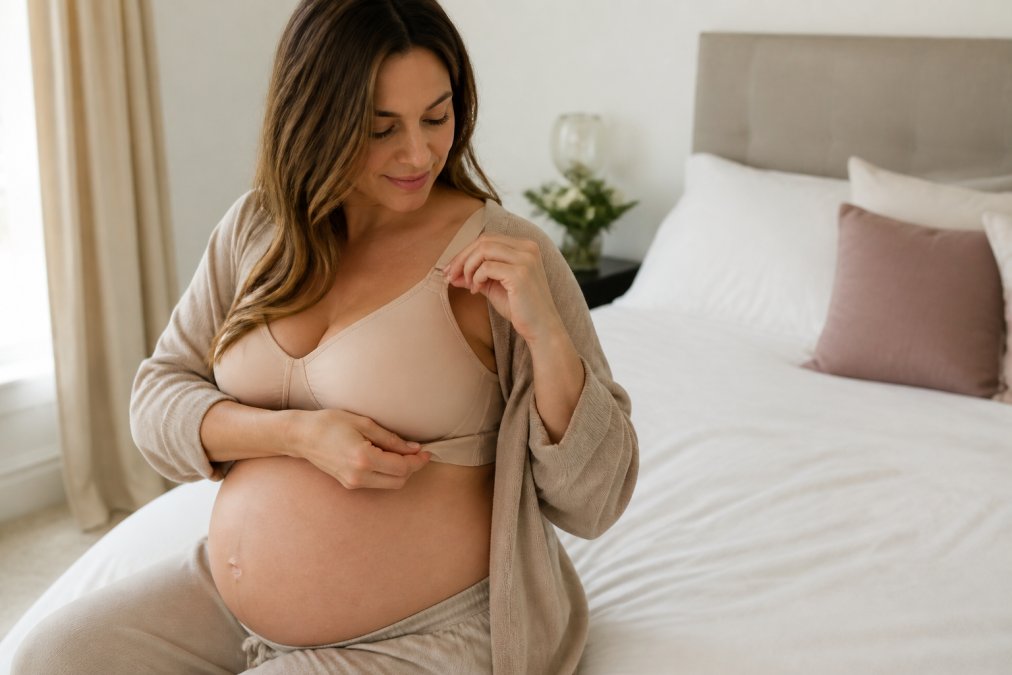
A supportive maternity bra distributes breast weight across the back and shoulders rather than letting straps carry the load. Key elements are a wide, high-stretch under-bust band, full coverage cups, and adjustable features. The band should sit firmly but not tightly on the loosest hook, allowing room for rib cage expansion.
Seamless, stretchable materials with four-way give move with you, while nursing clips add functionality without sacrificing structure. For heavier breasts, a higher side wing and wider straps offer the most secure feel.
Wire-Free Maternity Bras for Heavy Breasts: Our Top Picks
For a fuller bust, wire-free maternity bras for heavy breasts need extra reinforcement through the under-bust band and cup structure. Our top picks combine luxury fabrics with the engineering to hold everything securely without wire digging into your ribs.
Triumph Doreen Wire-Free Bra: Classic Everyday Support
The Triumph Doreen is our top pick for heavy breasts because it is a long-standing classic known for serious, non-wired support. Priced at £40.00, it features classic lace over a soft, supportive structure perfect for everyday wear. The polyamide, elastane, and viscose blend provides stretch and breathability.
A wider side panel distributes weight evenly. Available in Delicate White and Cotton Beige, the Doreen proves that wire-free does not mean support-free.
MEY Poetry Vogue Triangle Bra: Seamless Comfort
For a lighter feel with elegant styling, the MEY Poetry Vogue triangle bra at £62.00 is a standout. This non-wired bra combines delicate eyelash lace with soft padded cups and a smooth, seam-free finish, ideal for tender days when you want gentle coverage rather than heavy compression.
The elastic underbust band and wide adjustable straps provide light yet effective support, and the three-way hook-and-eye fastening gives room to adapt as your rib cage expands. Available in Black and Blossom.
Support Comparison: Key Features at a Glance
Choosing between these options comes down to how much structure you want and when you plan to wear them. Here is how our top picks compare on the features that matter most.
| Feature | Triumph Doreen | MEY Poetry Vogue |
|---|---|---|
| Price | £40.00 | £62.00 |
| Cup Style | Full coverage, classic | Soft padded, triangle |
| Under-bust Band | High-support, wider side | Elastic, flexible |
| Straps | Standard, supportive | Wide, adjustable |
| Best For | Heavy breasts, daily wear | Sensitive skin, light support days |
| Fabric Feel | Structured stretch | Seamless, 4-way stretch |
The Doreen is the workhorse for heavy-duty days, while the MEY is the luxury option for when comfort and aesthetics need to meet.

When to Buy Maternity Bras: Timing Your Switch
The right time to buy your first maternity bra is around the 12- to 16-week mark, when hormonal changes often cause a full cup size increase (peer-reviewed research). Waiting until your current bras are painful means weeks without proper support, which can strain Cooper's ligaments.
Plan to be fitted again in the third trimester, around 32 to 36 weeks, as your rib cage expands. A common mistake is buying a full nursing wardrobe too early. Invest in two or three well-fitting bras during pregnancy and wait to stock up on nursing styles until your supply regulates.
How to Measure Bra Size During Pregnancy at Home
Measuring your bra size during pregnancy requires a different approach than a standard fitting. Your rib cage is expanding, breast tissue is denser, and size can fluctuate daily. Here is a method that accounts for these changes.
Step 1: Measure Your Under-Bust Band
Wrap a soft measuring tape snugly around your rib cage, directly under your bust, ensuring it is level where the bra band should rest. Measure twice: once on a normal exhale and once after a deep inhale. Your band should fit comfortably on the loosest hook at the larger measurement.
Step 2: Measure Your Full Bust
Measure around the fullest part of your bust, keeping the tape parallel to the floor, while standing and again leaning forward slightly. The forward measurement often captures more tissue, especially for heavier breasts. Use the larger number for your cup calculation.
Step 3: Calculate Your Cup Size
The difference between your band and bust measurements determines your cup size, but pregnancy complicates this calculation. Density changes and tissue shifts mean the same inch difference can correspond to a different cup volume than pre-pregnancy. Use the calculation as a starting point, not a final answer.
The Fluctuation Factor: Measuring for Let-Down and Milk Supply
In the third trimester and especially postpartum, breasts can change by a full cup size or more within an hour due to let-down or engorgement. A bra that fits in the morning may feel restrictive by mid-afternoon.
To manage this, measure at two times of day: morning when breasts are least swollen and late afternoon when fullest. If the difference is more than one cup size, prioritise four-way stretch fabric and avoid rigid cups. You may need two sizes: one for everyday wear and a larger one for overnight or heavy-feeding days.
The Postpartum Rib Cage Recovery Factor
Most fitting guides ignore what happens to your rib cage after birth. Relaxin, which loosens ligaments throughout pregnancy, remains for several months postpartum, meaning your band size can stay elevated for weeks or months after delivery (the NIH).
Do not assume your third-trimester band size will be your postpartum size. Re-measure at three and six weeks postpartum. Many women find their band decreases by one to two inches during this period, even if cup size remains large. Bras with multiple hook-and-eye columns let you tighten the band as your rib cage recovers.
Visual Check: What a Correctly Fitted Bra Looks Like
A correct fit is not just about numbers. Here is what to look for when trying on a bra:
- The band: Should sit horizontally around your torso, not riding up at the back. You should be able to slide two fingers under the band, but no more.
- The centre gore: Should lie flat against your sternum. If it floats away from your chest, the band is too loose or the cups are too small.
- The cups: Should fully contain your breast tissue without spillage at the top or sides. The underwire (if present) should sit in the inframammary fold, not on breast tissue.
- The straps: Should sit comfortably on your shoulders without digging in. If you need to tighten them excessively to get support, the band is too loose.
If you are between sizes or unsure which structure suits your breast shape, a professional fitting removes the guesswork. A fitter can assess how your tissue sits within the cup and recommend styles that match your shape.
Support Beyond the First Trimester: Rib Cage and Posture
Pregnancy hormones, particularly relaxin and progesterone, soften ligaments throughout your body. By the third trimester, your rib cage can expand by 5 to 10 centimetres in circumference (PubMed). This expansion is more pronounced at the bottom of the rib cage, which is why many find their under-bust band becomes tight even when cup size seems unchanged.
Why Your Band Size Changes More Than You Expect
Most women expect cup size to increase during pregnancy, but few anticipate the band size change. Lower rib expansion means your band can increase by one or even two sizes by the third trimester. Buying a bra early with a band that fits on the loosest hook is essential. As your ribs expand, move to the middle and then tightest hook.
If you are on the tightest hook before 32 weeks, size up in the band. Do not wait until the bra feels painful. A band that is too tight can restrict breathing, already compromised by the growing uterus pressing on your diaphragm.
Posture Changes and the Role of Your Bra
As your baby grows, your centre of gravity shifts forward. To compensate, many women arch their lower back, tilting the pelvis forward and rounding the shoulders. This postural shift, combined with increased breast weight, places significant strain on the upper back and neck.
A supportive bra with a firm, wide under-bust band acts as an anchor. It redistributes breast weight onto your rib cage rather than your shoulders, allowing postural muscles to work more efficiently and reducing upper back strain.
The Postpartum Rib Cage Recovery Timeline
Your rib cage does not return to its pre-pregnancy size immediately after birth. Relaxin remains for several months postpartum, keeping ligaments loose. Many women need a smaller band size at six weeks postpartum than at two weeks, even if not breastfeeding.
Do not invest heavily in nursing bras during your third trimester based on your then-current band size. Instead, purchase one or two well-fitting nursing bras for the immediate postpartum period and buy more once your rib cage has begun to recover and milk supply has regulated.
Exercises to Support Your Changing Posture
While a good bra provides external support, strengthening your postural muscles helps maintain better alignment. Simple exercises can make a significant difference:
- Wall angels: Stand with your back against a wall, arms bent at 90 degrees. Slowly slide your arms up and down the wall, keeping your lower back flat. This strengthens the muscles that pull your shoulders back.
- Chin tucks: Sit or stand tall, gently draw your chin straight back as if making a double chin. Hold for five seconds, then release. This counteracts the forward head posture that often accompanies heavy breasts.
- Scapular squeezes: Sit tall with your arms at your sides. Squeeze your shoulder blades together and hold for five seconds. This strengthens the rhomboid muscles that keep your shoulders in alignment.
If you experience persistent upper back or shoulder pain despite a supportive bra, consult your midwife or a physiotherapist. They can assess your posture and recommend targeted exercises safe during pregnancy and postpartum.
Common Support Mistakes to Avoid in Maternity Bras
The most common support mistake is buying a bra with a band too loose to compensate for a cup too small. If your band rides up or breasts spill over the cups, you are not getting the support you need. Another frequent error is sticking with underwired bras out of habit, as wires can press on tender tissue and restrict lymphatic drainage.
Many mothers also overlook fabric. Non-breathable synthetics can trap moisture and irritate sensitive skin, especially as breast temperature increases in late pregnancy. Look for cotton-rich blends or moisture-wicking fabrics. Finally, re-fit regularly rather than assuming your third-trimester size will work postpartum.
Conclusion: Get a Professional Fitting for Lasting Support
Finding maternity bras for support that truly work requires more than reading size charts; it requires understanding how your body changes. The right wire-free bra distributes weight, adapts to your expanding rib cage, and provides comfort through the postpartum period. The foundation is a correct fit.
A professional fitting takes the guesswork out of sizing and ensures you leave with a bra that supports you through every stage. At Amelie Devizes, our expert bra fitting services provide a tailored experience in a warm, inclusive environment, from fluctuating milk supply to rib cage recovery.
Frequently Asked Questions
Are wire-free bras actually supportive enough for pregnancy?
Yes, a well-fitted wire-free bra can offer enough support for most daily pregnancy needs. The key is the under-bust band: it should sit level and snug, carrying most of the weight. Look for wide, adjustable straps and a deep, non-stretch band. For heavier breasts, targeted styles with structured side panels or firmer fabrics provide additional security without wires digging in.
Which bra is best for heavy breasts during pregnancy?
For heavy breasts, prioritise a wire-free style with a wide under-bust band and full coverage. The Triumph Doreen is a classic choice, offering a firm, non-wired fit with a high cotton content for breathability. Bras with wide, adjustable straps and a three-way hook-and-eye closure let you adapt the fit as your rib cage expands.
How do I measure my size as my body changes during pregnancy?
Measure yourself monthly from around week 12. Wrap a tape measure around your rib cage, directly under your bust, keeping it level and snug. That's your band size. Then measure around the fullest part of your bust. The difference in inches determines your cup size. Because breast tenderness and rib cage expansion affect the fit, measuring monthly helps you track changes.
When should I switch to a maternity-specific bra?
Start wearing maternity bras when your regular bras feel tight or uncomfortable, often between weeks 12 and 16. This is when rib cage expansion and breast growth typically accelerate. A maternity bra uses a deeper band and softer cups to accommodate these changes. Buying a new one early prevents skin irritation and provides better support as your weight distribution shifts.
How many maternity bras do I need for my hospital bag?
Pack two or three wire-free maternity bras for your hospital stay. Choose styles with nursing access, such as drop-down cups or front openings, for easy feeding. Seamless, breathable fabrics are kind to sensitive skin. One option can be a slightly larger size, as breasts can swell significantly when your milk comes in a few days after birth.
Finding the right support during pregnancy is a challenge, but it does not have to be a struggle. Our team offers personalised fittings that account for every change your body goes through. Get started with Amelie Devizes and experience a fitting designed around your comfort, your shape, and your needs.
This article was written using GrandRanker