

Best Bras for Large Bust Support: A 2026 Guide
Table of Contents
- What Makes a Bra Suitable for Large Bust Support
- How to Measure Your Bra Size at Home
- Underwired vs. Non-Wired Options for Large Busts
- Top Bra Styles for Fuller Busts: Full Cup and Balconette
- Signs of a Poorly Fitting Bra and How to Fix Them
- Lingerie Care Tips for Longevity
- The Physical Impact of Proper Bra Support
- Our Top Recommendations for Large Bust Support
What Makes a Bra Suitable for Large Bust Support
Finding the right bra for large bust support involves understanding how specific design features work together to distribute weight, prevent spillage, and eliminate discomfort. A well-fitting bra for fuller busts combines underwire strength, wide straps, reinforced bands, and properly positioned gores to anchor breast tissue and reduce strain on shoulders and back. Fuller busts need bras engineered from the ground up, not scaled-up versions of smaller sizes.
Key Features That Matter for Fuller Busts
Side support is non-negotiable for larger cup volumes. Look for bras with extended side panels and reinforced underwire that extends further around the ribcage than standard designs to prevent side spillage and the "quad-boob" effect.
Padded or reinforced straps make an immediate difference. Wider straps (typically 2.5 cm or more) distribute pressure across a larger shoulder surface, reducing strain and visible indentation.
The gore, the fabric bridge between the two cups, must sit flat against your breastbone. For larger busts, a taller gore provides better containment and prevents tissue from spilling over the top.
Band stability is foundational. The band should sit parallel to the ground all the way around, with at least two fingers' space between the band and your body when fastened on the loosest hook.
Understanding Cup Sizing and Band Stability
Cup size increases with band size. A D cup on a 32 band is dramatically smaller than a D cup on a 38 band. Sister sizing matters: moving down one band size and up two cup sizes (e.g., from 36D to 34F) maintains the same cup volume while potentially improving band stability.
Extended sizing, bras available in cup sizes beyond DD, has expanded significantly in recent years. Sizes like E, F, G, and beyond are now offered by specialist brands and some mainstream retailers.
How to Measure Your Bra Size at Home
Accurate measurement is the foundation of proper fit. You'll need a soft measuring tape and ideally a mirror. Wear an unpadded bra or no bra for the most accurate reading.
Measure your underbust first. Wrap the measuring tape snugly around your ribcage directly under your bust, parallel to the ground. Round to the nearest whole number, this is your band size.

Next, measure your bust around the fullest part, keeping the tape parallel to the ground and loose enough that it doesn't compress breast tissue. Stand naturally.
The difference between your bust measurement and underbust measurement determines your cup size. Each 2.5 cm of difference equals one cup size: 2.5 cm = A cup, 5 cm = B cup, 7.5 cm = C cup, 10 cm = D cup, 12.5 cm = DD cup, 15 cm = E cup, and so on.
Underwired vs. Non-Wired Options for Large Busts
Underwire provides structure and lift by creating a defined cup shape and anchoring breast tissue. For larger busts, underwire is typically essential because non-wired designs struggle to support heavier breast volume without sagging or flattening.
Underwire distributes weight around the perimeter of the cup rather than relying solely on elastic. Quality matters significantly, poorly constructed underwire can poke, dig, or shift out of position.
When Non-Wired Support Works
Non-wired bras can work for larger busts when seeking comfort over maximum lift, during breast tenderness, or for loungewear and sleep. Some well-engineered non-wired options featuring structured fabric, reinforced side panels, and strategic seaming provide adequate everyday support without underwire rigidity.
The trade-off is noticeable. Non-wired bras typically offer less lift and projection, flatten slightly at the sides, and may not maintain support as effectively throughout a full day. For professional settings or special occasions, underwired designs almost always outperform non-wired alternatives for larger cup sizes.
Top Bra Styles for Fuller Busts: Full Cup and Balconette
Two primary styles dominate the large bust support category, each with distinct advantages depending on your needs and body shape.
Full Cup Bras for Maximum Coverage
Full cup designs enclose the entire breast from the top of the cleavage to the base, offering maximum coverage and support. The cups extend higher than balconette styles, preventing spillage over the top and providing security for women with fuller, higher-set breasts.
Full cup bras excel at preventing visible panty lines and offer exceptional comfort for all-day wear. Weight is distributed across a larger surface area, reducing strain on the gore and band. The potential drawback is silhouette, full cup bras create a rounder, more modest shape compared to the cleavage-forward profile of balconette styles.
Balconette Bras with Superior Support
Balconette styles cover roughly three-quarters of the breast, leaving the upper portion exposed. For larger busts, balconette bras must be engineered with exceptional precision, featuring reinforced upper cup seaming, strategic fabric placement, and underwire that extends further toward the sides.
Balconette bras offer versatility, working under low-cut necklines while providing the support and containment that larger busts demand. Many women find the lifted, rounded silhouette more flattering than full cup alternatives.
Signs of a Poorly Fitting Bra and How to Fix Them
A bra that doesn't fit properly creates visible problems and physical discomfort.
Spillage over the cup indicates your cups are too small. Try going up one cup size.
A band that rides up at the back signals the band is too loose. Try going down one band size, which will also increase the cup volume through sister sizing.
Shoulder pain or visible indentation from thin straps means you need wider, padded straps or a different band size.
Wrinkling inside the cups suggests your cups are too large. Try going down one cup size.
A gaping gore that doesn't sit flat against your breastbone indicates either the band is too loose or the cups are too large.
Lingerie Care Tips for Longevity
Quality bras represent a significant investment. Proper care extends their lifespan and maintains support.
Hand wash your bras in cool water with a gentle detergent. Fill a basin with cool water, add a small amount of lingerie wash, submerge the bra for 5-10 minutes, gently agitate, rinse thoroughly, and squeeze out excess water without wringing.
Air dry completely before wearing again. Never tumble dry, as heat damages elastic permanently. Lay bras flat on a clean towel or hang them by the band. Drying typically takes 24-48 hours.
Rotate between multiple bras rather than wearing the same one daily. Wearing the same bra every day accelerates elastic degradation and reduces the lifespan to 6-9 months. Rotating between three or more bras extends the lifespan to 12-18 months or longer.
Store bras in a drawer where they won't be compressed or creased. Avoid hanging bras by the straps for extended periods, as gravity stretches the shoulder seams over time.
The Physical Impact of Proper Bra Support
Poor bra fit creates measurable physical strain. Women wearing ill-fitting bras often experience chronic shoulder, neck, and upper back pain. The shoulders compensate for inadequate support by tensing and elevating, creating muscle fatigue and tension headaches.
Proper support distributes the weight of breast tissue across the band, straps, and underwire rather than concentrating pressure on the shoulders. This distribution reduces muscle strain and allows better posture. Many women report improved posture simply by wearing a correctly fitted bra.
For larger busts, the physical difference is pronounced. A properly fitted bra with adequate underwire, wide straps, and a stable band feels noticeably lighter and more secure, reducing fatigue throughout the day.
Proper support also affects spinal alignment. When breast tissue isn't properly supported, women often hunch forward slightly to reduce shoulder strain. Correct bra fit encourages neutral spinal alignment naturally.
Our Top Recommendations for Large Bust Support
Finding the right bra requires balancing support, comfort, style, and budget.
Empreinte Gaby Bustier Long Line Bra: Maximum Support and Elegance
The Empreinte Gaby Bustier Long Line Bra represents the gold standard for larger bust support. Available in cup sizes up to G, this French-engineered design combines exceptional support with elegant aesthetics.
The longline construction extends support down the torso, distributing weight across a larger area and providing core stability. The wide, soft-feel elastic band sits comfortably without digging or riding up. Reinforced side panels prevent spillage, while the carefully positioned gore sits flat and secure.
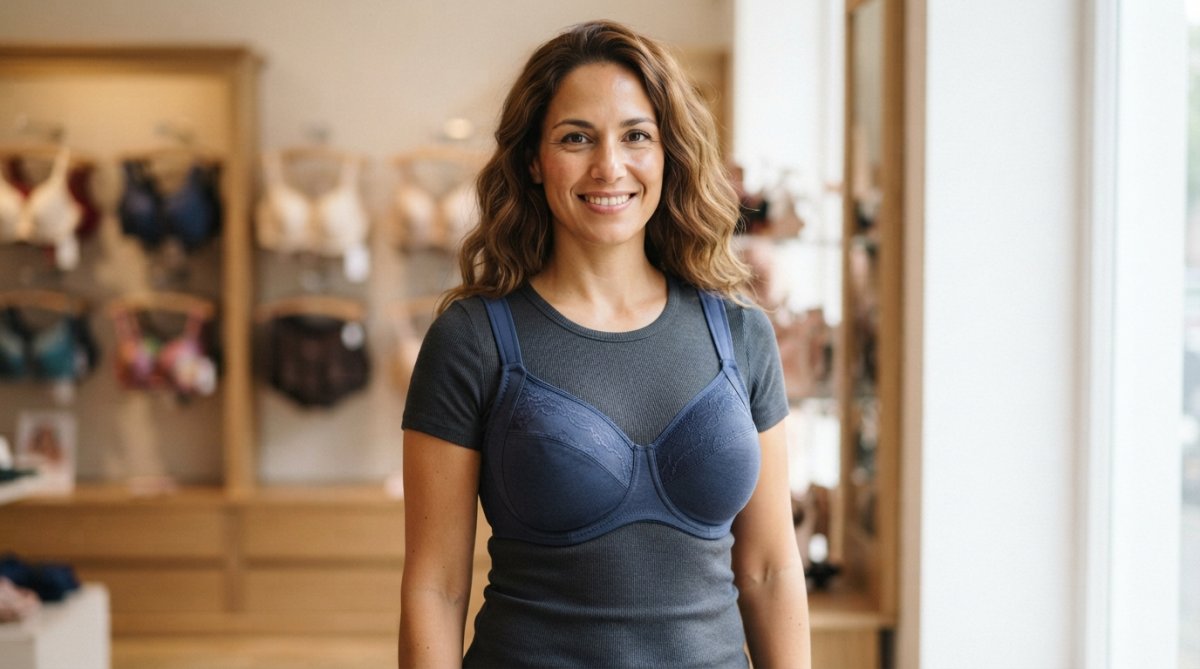
The Gaby's construction reflects decades of French lingerie expertise. Every seam is positioned to enhance lift and projection. The shoulder straps are positioned slightly inward to reduce shoulder strain, and the underwire extends further toward the sides than standard designs.
At £103.00, the Gaby represents a premium investment, but the engineering justifies the cost. Women with larger busts often report that the Gaby finally delivers the support and silhouette they've been seeking. The bra maintains its shape and support through proper care, making it a long-term investment.
Triumph Doreen Wire-Free Bra: Comfort Without Compromise
The Triumph Doreen Wire-Free Bra offers a compelling alternative for those seeking comfort-focused support without underwire. Available in both delicate white and cotton beige options at £40.00 each, the Doreen proves that wire-free doesn't mean unsupported.
The Doreen's construction uses structured fabric and strategic seaming to create definition and lift without underwire. The soft design prioritizes comfort for all-day wear, making it ideal for sensitive days, loungewear, or situations where you want support without rigidity.
This bra works best for women who find underwire uncomfortable or who prefer a softer, more flexible support system. The trade-off is slightly less dramatic lift and projection compared to underwired alternatives, but the comfort advantage appeals to many women.
At £40.00, the Doreen represents excellent value for quality construction and comfort-focused design. Many women keep multiple Doreen bras in rotation for everyday wear while reserving underwired styles for occasions requiring maximum lift and projection.
Finding the right bra for larger busts transforms how you feel physically and emotionally. Proper support eliminates chronic shoulder pain, improves posture, and builds confidence. At Amelie Devizes, we understand that larger bust support isn't one-size-fits-all, it requires expert fitting and access to genuinely supportive designs. Our personalized bra fitting service helps you discover your true size and find styles engineered specifically for fuller busts, ensuring comfort and confidence. Shop all products and experience the difference expert fitting makes.
Frequently Asked Questions
What type of bra is best for supporting heavy breasts?
Underwired bras with full cup coverage, reinforced bands, and wide padded straps provide the most support for larger busts. Look for bras with seamed or moulded cups that distribute weight evenly. The Empreinte Gaby Bustier Long Line Bra (£103.00) is designed specifically for this, offering extended sizing up to cup G and featuring wide, soft-feel elastic for comfort and lift. A longline design adds extra torso support, reducing strain on shoulders and back.
How can I tell if my bra is providing enough support?
A properly fitting bra should have straps that sit straight across your shoulders without digging in, a gore that tacks flat against your breastbone, and cups that fully contain your breast tissue without spillage. The band should sit level all around, not riding up at the back. If you experience shoulder pain, back pain, or see spillage above or under the cups, these are signs of a poorly fitting bra that needs adjustment. Your straps should not slip, and the underwire should sit in your natural inframammary fold.
Are non-wired bras effective for large bust support?
Non-wired bras can work for larger busts if they feature reinforced bands, wide straps, and moulded cups designed for weight distribution. The Triumph Doreen Wire-Free Bra (£40.00) uses soft elastic and structured fabric to offer comfortable everyday support without underwire. However, for maximum lift, projection, and all-day comfort with very heavy breasts, most fitters recommend underwired options. Non-wired styles suit those prioritising comfort over structured lift, or as a secondary option for relaxation at home.
How do I measure my bra size accurately at home?
Measure your underbust snugly with a soft tape measure, keeping the tape parallel to the ground, this is your band size. Then measure loosely around the fullest part of your bust. The difference between bust and underbust measurements determines your cup size: each inch (or 2.5 cm) of difference equals one cup size. For example, a 2.5 cm difference is an A cup, 5 cm is a B cup, and so on. Wear an unpadded bra or no bra for accuracy, and measure in front of a mirror to ensure the tape sits level.
What features should I prioritise when shopping for bras for larger cup sizes?
Prioritise side support with reinforced side panels to prevent spillage, full cup coverage to contain breast tissue, wide padded straps to distribute weight and reduce shoulder strain, an underwire or structured band for lift and projection, and a band that sits level around your body. Extended sizing (DD and above) is essential. Look for bras with seamed cups for shaping, a sturdy hook-and-eye closure for proper support, and breathable fabrics that won't cause discomfort during extended wear. Professional fitting ensures all these elements work together for your specific shape.
This article was written using GrandRanker