

Best Lingerie for Back Pain: 7 Supportive Styles
Table of Contents
- What Causes Back Pain Related to Bras
- Key Features to Look for in Supportive Lingerie for Back Pain
- How to Measure Bra Size Correctly
- Signs of a Poorly Fitted Bra and How to Spot Them
- 7 Best Styles of Lingerie for Back Pain Relief
- Material Considerations for Comfort and Breathability
- Conclusion
Last Updated: August 15, 2026
What Causes Back Pain Related to Bras
Back pain from bras stems from poor fit, inadequate support, and uneven weight distribution across shoulders and back. When a bra doesn't fit correctly, the band rides up, straps dig in, and underwire or elastic pressures sensitive spine and ribcage areas. Lingerie for back pain with proper design eliminates this discomfort entirely.
Most women wear the wrong bra size. Improper sizing creates cascading problems: the band tightens to compensate for cup mismatches, straps slip from incorrect positioning, and full breast weight concentrates on narrow shoulder straps instead of distributing across wider support structures. Over time, this causes chronic shoulder tension, upper back pain, and nerve impingement where straps compress shoulder nerves.
Bra construction is critical. Underwired designs can dig into the ribcage if the wire channel isn't positioned correctly. Narrow back bands concentrate pressure into thin lines rather than spreading it across wider surfaces. Thin straps cut into shoulder tissue. Lingerie for back pain designed with orthopedic principles, wide back bands, cushioned straps, proper weight distribution, eliminates these pressure points.
Poor posture amplifies bra-related back pain. When breast weight pulls forward, the spine compensates by rounding, creating thoracic and lumbar tension. A supportive bra with proper underbust support and structured band helps maintain spinal alignment, reducing muscular effort required to stay upright.
Key Features to Look for in Supportive Lingerie for Back Pain
Not all bras are created equal for back pain relief. The features that matter most are specific, measurable, and directly tied to weight distribution across your body.
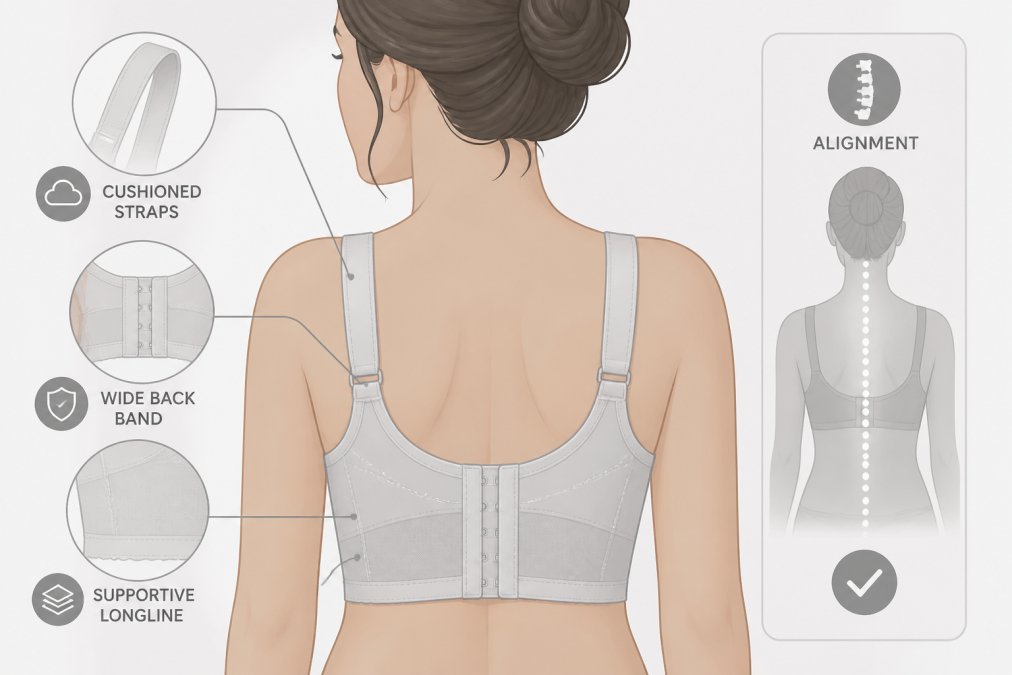
Wide back bands are non-negotiable. A band at least 4 cm wide distributes breast weight across a larger surface area, reducing pressure concentration. The Empreinte Gaby Bustier Long Line Bra exemplifies this with its wide, soft-feel elastic spanning significant back portion.

Cushioned straps prevent shoulder strain leading to chronic neck and upper back tension. Look for substantial padding, not just fabric. Straps positioned closer together (roughly shoulder-width) reduce strain compared to wide-set straps.
Underbust support is critical for spinal alignment. The band must sit level all the way around, keeping your ribcage stable and preventing forward slouch that causes thoracic pain.
Orthopedic design means the bra supports your body's natural curves rather than forcing arbitrary shapes. This includes properly angled underwires following natural ribcage contour and structured panels providing lift without strain.
Hook and eye closures allow precise band tension adjustment. Even half a hook difference changes support levels.
Full coverage designs prevent breast tissue shifting during the day, reducing constant micro-adjustments your back muscles make to compensate.
How to Measure Bra Size Correctly
Professional fitting is the gold standard because fitters account for factors tape measures can't capture: how your specific body distributes weight, how different band tensions affect posture, and whether discomfort stems from sizing or design.
To measure at home, use a soft tape measure. Measure your underbust (directly under bust, parallel to ground) while wearing an unpadded bra or no bra. This measurement converts to band size: a 70 cm underbust measurement typically equates to a 32 band size, 75 cm to a 34, and so on. Then measure your bust at its fullest point, keeping tape parallel and not too tight.
The difference between bust and underbust measurements determines cup size. Each 2.5 cm difference typically equates to one cup size: 2.5 cm = A cup, 5 cm = B cup, 7.5 cm = C cup, etc. If your underbust is 75 cm and bust is 88 cm, your size is roughly 34E.
However, this is only a starting point. Bra sizing varies significantly between brands, and actual size depends on specific design, band tension, and cup volume. Professional fitting yields better results. Fitters assess whether discomfort comes from sizing, design, or both, and recommend styles specifically engineered for back pain relief.
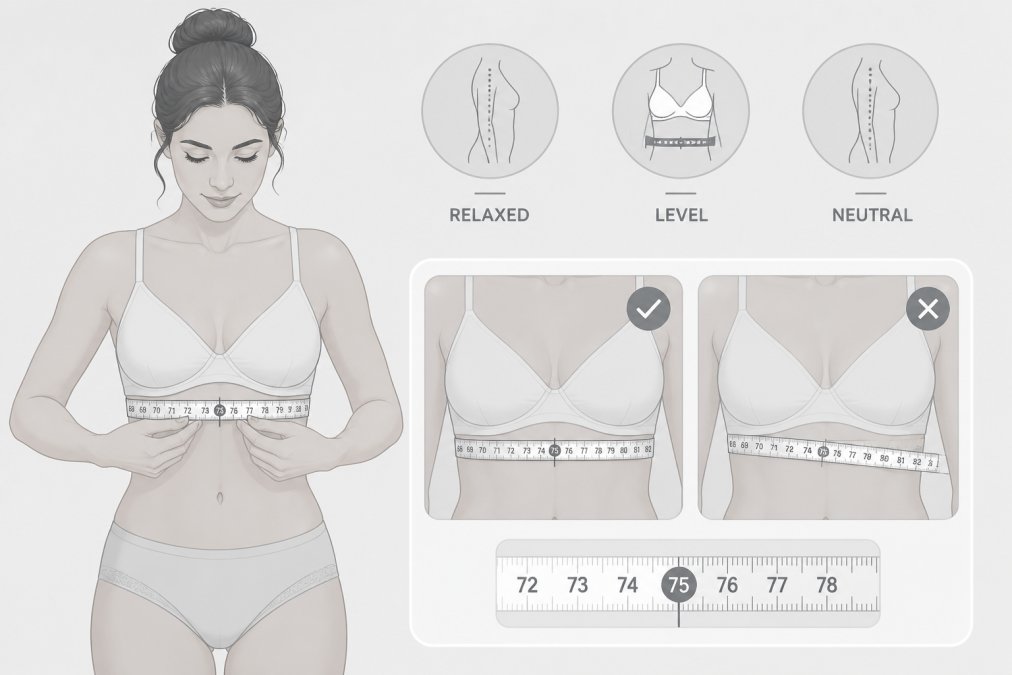
When visiting for professional fitting, bring bras that cause discomfort. Fitters examine fit, identify pressure points, and recommend sizes and styles addressing your specific pain patterns.
Signs of a Poorly Fitted Bra and How to Spot Them
A poorly fitted bra sends clear physical signals. Learning to recognise these helps identify whether back pain is actually a fit issue.
Band riding up in back is the most obvious sign. If your bra band creeps toward shoulder blades, the band is too loose or cup size too small, creating uneven weight distribution and upper back pressure.
Straps slipping off shoulders indicate either a loose band or straps positioned too far apart for your frame. Constant strap adjustment fatigues shoulder muscles and creates tension.
Digging straps leaving red marks mean the strap is too narrow, band too tight, or you're carrying too much shoulder weight because the band isn't providing enough support. This is a primary cause of shoulder and neck pain.
Underwire poking or digging into ribcage or armpits signals incorrect size or design not matching your ribcage shape. Underwires should sit flat without pressure.
Spillage or overflow at cups means cup size is too small, forcing constant breast tissue shifting that destabilises your torso and increases back strain.
Gaps between cup and breast tissue indicate cup is too large, often causing band to ride up and creating cascading fit problems.
Bulging at back band where it sits on back ribs means band is too tight or cup size too small, creating concentrated pressure causing mid-back pain.
7 Best Styles of Lingerie for Back Pain Relief
The following styles are specifically selected for orthopedic design and proven ability to reduce back pain. Each addresses different pain patterns and body types.
1. Empreinte Gaby Bustier Long Line Bra
The Empreinte Gaby is the definitive choice for comprehensive back support. This underwired longline bra extends several centimetres below the natural bra line, providing underbust support that stabilises your entire ribcage and lower back. The wide, soft-feel elastic back band distributes weight across a substantial surface area, eliminating pressure concentration. Available in cup sizes up to G, it accommodates fuller figures without sacrificing support.
French engineering positions the underwire to follow your natural ribcage contour rather than forcing your body into arbitrary shapes.
At £103.00, it's a premium investment requiring hand-washing to preserve construction. For anyone experiencing genuine back pain, this cost is justified by pain relief and improved posture.
Best for: Chronic back pain, post-surgical recovery, larger cup sizes needing structured support, anyone willing to invest in premium comfort.
2. Triumph Doreen Wire-Free Bra
For those finding underwires uncomfortable or restrictive, the Triumph Doreen wire-free bra offers surprising support without rigid structure. This style uses soft cup construction and elastic support panels for lift and stability. Available in delicate white and cotton beige (£40.00 each), the Doreen prioritises comfort without sacrificing function.
Wire-free design eliminates ribcage and thoracic pressure entirely, making it ideal for women with rib pain, thoracic outlet syndrome, or underwire sensitivity.
Wire-free bras provide less structured support than underwired styles, working best for mild to moderate back pain. If your pain stems from rib pressure or thoracic sensitivity, this is often the better choice than forcing yourself into underwired designs.
Best for: Rib sensitivity, mild to moderate back pain, everyday comfort without rigid structure, post-thoracic procedure recovery.
3. Wireless Construction for Pressure Relief
Wireless bras address pressure from underwire channels on the ribcage and thoracic spine. Many women experience sharp pain or numbness when underwires sit on sensitive areas. Wireless construction eliminates this entirely using soft cup materials and elastic support instead of rigid wire.
Wireless bras are easier to move in, more forgiving of size fluctuations, and generally more comfortable for all-day wear. They're particularly valuable for post-surgical patients, women with fibromyalgia or chronic pain conditions, and anyone whose back pain has a nerve-related component.
The trade-off is that wireless bras typically provide less lift and definition than underwired styles. In larger cup sizes, a wireless bra may not provide enough support.
Best for: Rib sensitivity, thoracic pain, post-surgical recovery, chronic pain conditions, everyday comfort prioritised over maximum lift.
4. Wide Back Bands and Cushioned Straps
The combination of wide back bands (at least 4 cm) and cushioned straps is the most direct intervention for shoulder and upper back pain. The wide band distributes weight broadly, reducing shoulder use, while cushioned straps prevent cutting sensations creating shoulder tension.
Look for straps positioned closer to shoulder-width rather than spread wide. Wide-set straps create mechanical disadvantage, forcing shoulders to work harder. Closer-set straps align with natural shoulder anatomy.
When evaluating any bra for back pain, prioritise these two elements above all others. They're the most direct path to pain relief.
Best for: Shoulder pain, neck tension, upper back discomfort, anyone carrying significant breast weight.
5. Posture Corrector Bras and Orthopedic Support
Posture corrector bras are specifically engineered to encourage spinal alignment by providing structured support that makes slouching uncomfortable. These typically feature reinforced back panels, underwires positioned to support thoracic curves, and band tension calibrated to pull shoulders back slightly.
For back pain caused by chronic poor posture, this addresses the root cause rather than just treating symptoms. Orthopedic support means the bra is engineered with anatomical principles: the underwire follows ribcage contours, the band provides graduated support across different back regions, and the overall structure promotes neutral spine alignment.
These bras require proper fitting because support is only effective if positioned correctly.
Best for: Postural back pain, chronic slouching, upper back and shoulder tension, anyone seeking to retrain posture while managing pain.
6. Full Coverage and Underbust Support
Full-coverage bras cover your entire breast tissue rather than just the lower half, providing superior weight distribution and stability. Because more breast is supported, weight spreads across a larger area, reducing concentration and strain.
Underbust support is critical. The band must sit level all the way around, providing stable ribcage support. When properly positioned and fitted, it acts as an anchor stabilising your entire torso. Longline styles like the Empreinte Gaby are effective because they extend underbust support further down your torso.
Full-coverage designs also prevent constant micro-adjustments your back muscles make when breast tissue shifts, directly reducing pain.
Best for: Comprehensive back support, larger cup sizes, chronic back pain, anyone seeking maximum stability and weight distribution.
7. Breathable Fabrics for All-Day Comfort
The fabric your bra is made from affects both comfort and your ability to wear it consistently. Breathable fabrics allow air circulation, preventing heat and moisture buildup that creates skin irritation and encourages early bra removal.
Look for natural fibres or moisture-wicking synthetics. Cotton blends, bamboo viscose, and technical fabrics designed for moisture management are ideal. The Triumph Doreen uses a polyamide, elastane, and viscose blend (or cotton in beige) specifically chosen for breathability and comfort.
Breathability matters because if your bra causes skin irritation or feels hot, you'll remove it before your back receives full support. Choosing breathable fabrics means you're more likely to wear your supportive bra consistently, resulting in sustained pain relief.
Best for: All-day comfort, anyone prone to skin sensitivity or heat sensitivity, consistent wear supporting sustained pain relief.
Material Considerations for Comfort and Breathability
The materials your bra is constructed from directly affect both pain relief and wearability. A bra providing excellent support but causing skin irritation will be abandoned, negating its benefits.
Natural fibres like cotton and silk are breathable and gentle on skin, but lack the elasticity needed for support. Most supportive bras blend natural fibres with elastane (spandex) to combine breathability with breathability with stretch and recovery.
Elastane content (typically 15-25%) provides stretch and recovery keeping a bra supportive through repeated wear and washing. Higher elastane means longer shape maintenance, but can reduce breathability. The balance matters: enough elastane for support without becoming a heat trap.
Viscose (derived from wood pulp) offers a middle ground between natural and synthetic fibres. It's breathable, soft, and drapes well, making it ideal for bras needing both support and comfort. The Triumph Doreen uses viscose as part of its blend for this reason.
Moisture-wicking synthetics like polyamide pull sweat away from your skin, keeping you dry during extended wear. These are particularly valuable for women wearing bras 12+ hours daily or who are active.
Hand-washing in cool water with gentle detergent preserves fabric integrity and elasticity far better than machine washing. The Triumph Doreen and Empreinte Gaby both benefit from hand care.
Choosing lingerie for back pain is about understanding which specific design elements address your particular pain pattern, then finding a bra incorporating those elements in materials comfortable enough to wear consistently.
Back pain from bras is preventable and reversible with proper fit and design. At Amelie Devizes, our fitting specialists identify whether your pain stems from sizing, design, or both, then recommend styles specifically engineered for relief. The Empreinte Gaby Bustier Long Line Bra and Triumph Doreen Wire-Free Bra represent two different approaches to back support, each suited to different needs. Professional fitting ensures you choose the style that actually works for your body.

Shop all products at Amelie Devizes and experience the difference that proper support makes.
Frequently Asked Questions
Can a poorly fitted bra actually cause back pain?
Yes. An ill-fitting bra creates uneven weight distribution across your shoulders and back, forcing your muscles to compensate. This leads to tension, strain, and chronic discomfort. Signs include shoulder strap digging, band riding up, or spillage. A proper fit, verified through professional measurement, redistributes pressure evenly and supports your spine alignment, reducing pain significantly.
How do I know if I'm measuring my bra size correctly?
Measure your underbust (directly under your bust) with a soft tape measure while wearing no bra and standing straight. Then measure your bust at its fullest point. The difference between these measurements determines your cup size. Underbust measurement becomes your band size. Many women wear the wrong size for years; professional fitting services can verify your measurements and ensure proper support for back pain relief.
Do posture corrector bras actually help with back pain?
Posture corrector bras provide orthopedic support by gently drawing your shoulders back and aligning your thoracic spine. They work best when combined with proper sizing and ergonomic design. These bras reduce shoulder strain and encourage better musculoskeletal alignment, which can relieve tension-related back pain. Results vary by individual, but consistent wear often improves posture and reduces discomfort over time.
Are wireless bras better for back pain than underwired styles?
Both can work, depending on fit and support structure. Wireless bras eliminate pressure from underwires but must have strong underbust support and wide back bands to prevent sagging and shoulder strain. Underwired bras offer superior weight distribution when properly fitted, as the wire supports the bust and reduces strain on shoulder straps. The key is finding a style, wireless or underwired, that fits your body perfectly and provides adequate pressure relief.
This article was written using GrandRanker