

What to Expect at a Professional Bra Fitting
Table of Contents
- Why a Professional Bra Fitting Matters
- What to Wear to a Bra Fitting Appointment
- How Long Does a Bra Fitting Take
- What Happens During Your Fitting Session
- Signs of an Ill-Fitting Bra You Should Know
- Bra Fitting After Pregnancy: What Changes
- Common Bra Fitting Myths Debunked
- How to Prepare for Your Appointment
Last Updated: August 25, 2026
Why a Professional Bra Fitting Matters
The right bra changes everything: comfort, confidence, posture, back health, and how your clothes fit. Yet most women wear the wrong size without realizing it. A professional bra fitting isn't a luxury; it's an investment in your wellbeing.
When fitted properly, the underband sits parallel to the ground, the gore sits flat against your breastbone, and breast tissue stays fully within the cup without spillage or gaps. Most discomfort, back pain, slipping straps, underwire digging, spillage, isn't your fault; it's the result of wearing the wrong size.
What to Wear to a Bra Fitting Appointment
Wear something you can easily remove and put back on, a loose top or shirt works best. Avoid complicated fastenings or tight fits that make changing difficult. Don't worry about wearing "nice" underwear; wear whatever you're comfortable in. Some women prefer to wear nothing underneath their top for quick changes; that's perfectly acceptable.
Avoid heavily padded or push-up bras if you're unsure of your size, as these distort the fitting process. Wear slip-ons rather than laced shoes so you won't fumble when moving between the fitting room and mirror.
How Long Does a Bra Fitting Take
A typical professional bra fitting takes 45 minutes to an hour, though some run longer depending on complexity. If you're post-surgery, post-pregnancy, or shopping for a specific occasion, allow extra time. Don't book this back-to-back with other commitments. Mention if you're shopping for multiple styles or need post-surgery fittings when you book; some boutiques will extend the appointment so there's no pressure to rush.
What Happens During Your Fitting Session
Initial Consultation and Measurement
Your fitter will ask about your concerns: back pain, slipping straps, underwire discomfort, or specific needs like bridal wear or post-surgery options. This conversation shapes everything that follows.
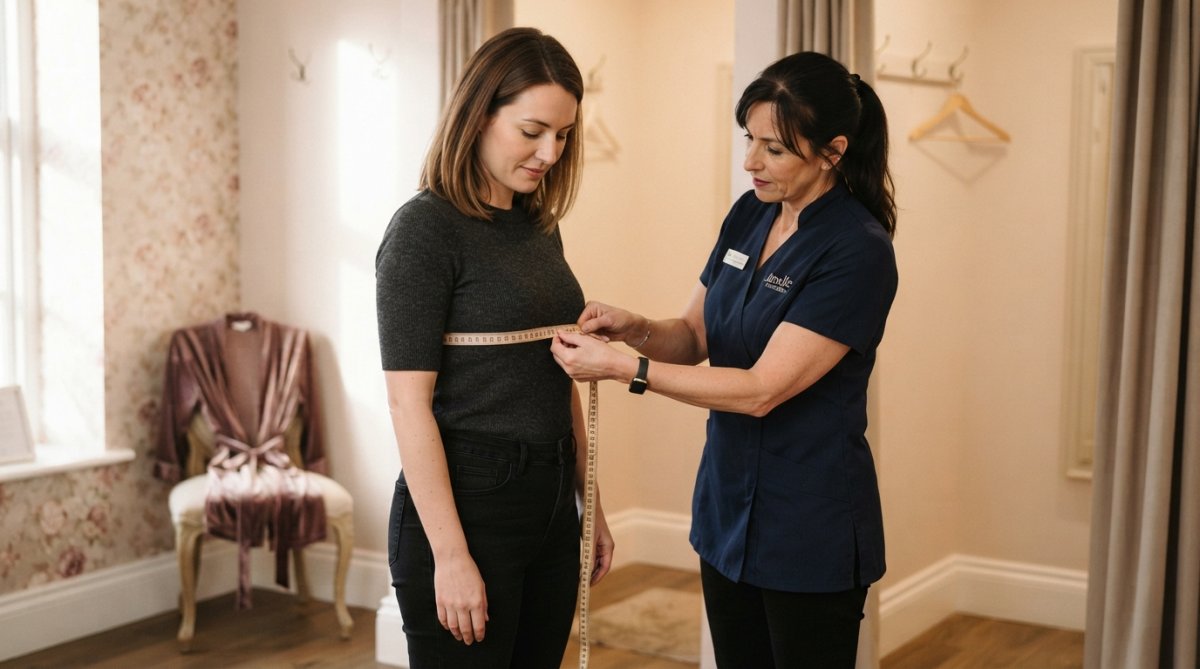
Your fitter uses a soft tape to measure your underbust (band measurement) and the fullest part of your bust. The difference between these determines your cup size, roughly one inch equals one cup size. Your fitter will also assess your current bra, checking whether the band rides up, straps slip, gore sits flat, and whether there's spillage or gaps.
The Fitting Room Experience
You'll move to a private, comfortable fitting room with a mirror at a distance where you can see the full picture. Your fitter should knock before entering and respect your modesty. Professional fitting environments maintain privacy, respect, and zero judgment.
Your fitter will bring bras to try, typically starting with your calculated size and variations if needed. They'll assess band tension, strap position, cup fit, and comfort. This is collaborative, if something doesn't feel right, say so. Your comfort is the goal.
Trying On and Adjusting
Once you find a close size, your fitter will help adjust it. The scoop and swoop technique, scooping breast tissue into the cup from the sides and underneath, ensures you're getting full support. Your fitter will check the hook and eye closure; you should fasten at the middle hook, giving room to tighten as the band stretches over time.
Signs of an Ill-Fitting Bra You Should Know
An ill-fitting bra sends clear signals. If your band rides up at the back or you can fit more than two fingers under it, it's too loose. If you can't fit one finger, it's too tight. The band should sit parallel to the ground all the way around.
Straps that slip mean either the band is too loose or the straps are set too far apart for your shoulder width. Spillage, breast tissue bulging out of the top or sides, means the cup is too small. Gaps between tissue and cup mean the cup is too large. The gore should sit flat against your breastbone; if it pulls away or digs in, the cups aren't the right shape for you. preparing for fittings.
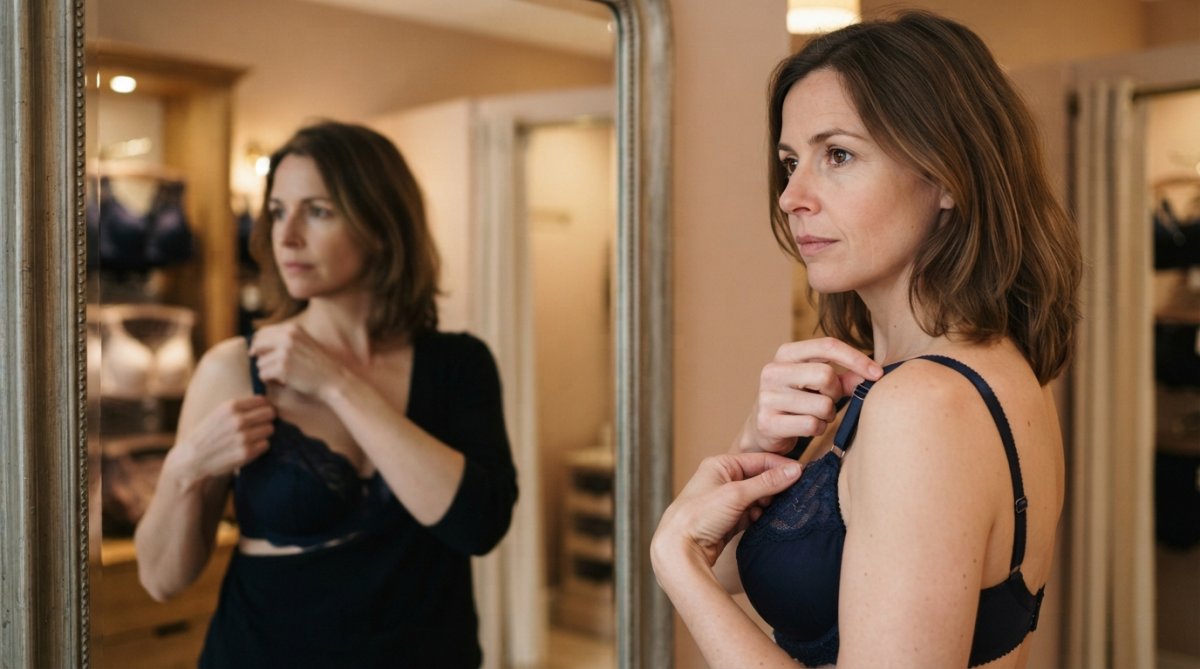
Shoulder pressure and strap discomfort often come from band tension. Back pain usually stems from inadequate support in the band or cups that are too small, forcing the band to ride up. Underwire discomfort can mean the wire sits in the wrong place or the wire shape doesn't match your body.
Bra Fitting After Pregnancy: What Changes
Pregnancy and breastfeeding change your breast tissue, shape, and size. Many women find their cup size increases during pregnancy and lactation; the band size may change too. After weaning, breasts often settle into a different size than pre-pregnancy.
Wait until you've been weaned for at least a few weeks before investing in a full wardrobe of new bras; your size will stabilise. Post-pregnancy bras need to prioritize comfort and practicality. A professional fitting addresses both physical changes and the emotional shift, you're rediscovering what feels good in your body after a major change.
Common Bra Fitting Myths Debunked
Myth: You should add inches to your underbust measurement to get your band size.
This outdated advice persists in many high street shops. Modern sizing is based on your actual underbust measurement. If your underbust measures 32 inches, your band size is 32. Adding inches leads to a band that's too loose.
Myth: All bras in the same size fit the same.
Bra sizing is not standardised across brands. A size 32D in one brand might fit completely differently than a 32D in another. Cup volume, band tension, and wire width vary. This is why a professional fitting involves trying multiple styles.
Myth: A professional fitting is only for women with larger cup sizes.
Professional fittings benefit everyone. Whether you wear an A cup or an H cup, proper fit matters. Everyone deserves comfort and confidence, regardless of size.
Myth: If a bra fits in the shop, it will always fit.
Bras stretch over time. Most fitters recommend fastening at the middle hook so you have room to move to a tighter hook as the band stretches. You might need to replace bras every 6-12 months depending on wear and care.
Myth: You need to wear a bra 24/7 for proper support.
There's no evidence that wearing a bra constantly improves support or breast health. Comfort and personal preference should guide your choices.
How to Prepare for Your Appointment
Book at a time when you're not rushed. Wear comfortable, easy-to-remove clothing, a loose top or button-up shirt works well. Think about what you're looking for: everyday wear, special occasions, post-surgery comfort, bridal wear, or maternity and nursing options.
Make a list of any fit issues: straps slipping, underwire digging, band riding up, back pain, spillage. Come with an open mind about size. Many women discover their true size is different from what they've been wearing. Remember: your size is just a number. What matters is how the bra feels and performs.
If you're post-surgery, post-pregnancy, or have specific medical needs, mention this when you book. Bring your current bra if you'd like feedback on it.
A professional bra fitting often changes how women feel about their bodies and clothing. When you find the right size and style, everyday life improves: your clothes fit better, you feel more supported, and you stop spending mental energy adjusting straps or dealing with discomfort.
Amelie Devizes specialises in personalised fitting experiences. Whether you're looking for your first professional fitting, shopping after pregnancy, preparing for a wedding, or seeking post-surgery support, our team takes time to understand your needs and find pieces that make you feel confident and comfortable. We carry carefully curated collections including styles like the Lingadore Invisible Padded Soft Bra and luxury options like the MEY Poetry Vogue Triangle Bra, all selected for quality, comfort, and genuine support. Book your fitting appointment and discover what a difference the right bra makes.


| Issue | What It Means | What to Do |
|---|---|---|
| Band rides up at back | Band is too loose | Go down a band size |
| Straps slip off shoulders | Band too loose or straps too far apart | Try a smaller band or different style |
| Spillage at cup edges | Cup size too small | Go up a cup size |
| Gaps between breast and cup | Cup size too large | Go down a cup size |
| Underwire digs in | Cup too small or wire shape wrong | Try larger cup or different brand |
| Shoulder pressure | Band too tight or too loose | Adjust band size; check strap position |
| Gore pulls away from chest | Cup too large | Go down a cup size |
Frequently Asked Questions
Do you have to take your bra off during a professional bra fitting?
Yes, you'll need to remove your bra during a professional bra fitting so the fitter can assess your current fit, take accurate measurements, and evaluate how your breast tissue sits without support. This allows them to identify any spillage, band tension issues, or wire placement problems. The fitting room provides privacy and modesty throughout the process. Most fitters are experienced in making clients feel comfortable and confident during this essential part of the fitting.
What is the two-finger rule for bra fit?
The two-finger rule is a quick check for band tension: you should be able to fit two fingers comfortably under the underbust band when the bra is fastened. If you can fit more than two fingers, the band is too loose and won't provide proper support. If you can't fit two fingers, the band is too tight and will cause discomfort and shoulder pressure. A professional fitter will check this during your fitting and adjust sizing accordingly to ensure the band sits level and stable.
How long does a professional bra fitting usually take?
A professional bra fitting typically takes 30 to 60 minutes, depending on how many styles you try and the complexity of your needs. The initial consultation and measurement usually takes 10-15 minutes, followed by trying on multiple options. If you're seeking specialised fitting (bridal, post-surgery, or post-pregnancy), allow closer to an hour. This unhurried approach ensures accuracy and allows time to discuss comfort, lift, silhouette, and personal preferences without feeling rushed.
What should I wear to a bra fitting appointment?
Wear comfortable, easy-to-remove clothing such as a loose top or shirt you can slip off easily. Avoid complicated outfits with multiple layers or tight clothing that makes changing difficult. Wear simple underwear or go without so the fitter can see your natural shape and how breast tissue sits. Many women wear a camisole or vest top under a loose shirt for modesty. Choose footwear you can stand in comfortably for 30-60 minutes, and avoid wearing your most flattering bra beforehand, as this can mask fitting issues.
What are the signs that my current bra doesn't fit properly?
Common signs of an ill-fitting bra include: band riding up at the back, straps slipping off shoulders, spillage above the cups, gaps between cup and breast tissue, underwire digging into breast tissue, shoulder pressure or indentation, back pain, or visible lines under clothing. You might also notice the gore (centre panel) doesn't sit flat against your sternum, or the bra feels either too tight or too loose. If you experience any discomfort during the day or need constant adjustments, a professional fitting can identify the exact sizing or style issues.
Does my bra size change after pregnancy and breastfeeding?
Yes, bra fitting after pregnancy is essential because your breast tissue, band size, and cup volume typically change significantly during and after pregnancy and breastfeeding. Your band may expand, cup size may increase, and tissue elasticity shifts. Many women find their pre-pregnancy size no longer fits properly. A professional fitting helps you find styles that offer comfort and support during these changes, whether you're nursing or have finished breastfeeding. Waiting until after weaning gives the most accurate sizing, though many women benefit from maternity and nursing bras during pregnancy.
Will a proper bra fitting actually reduce back pain and discomfort?
Yes, proper bra fitting can significantly reduce back pain and shoulder discomfort. An ill-fitting bra with inadequate support forces your back muscles to compensate, leading to tension and pain. The correct band size, cup volume, and wire placement distribute weight evenly across the underbust and shoulders, reducing strain. When the underband sits level and snug, straps sit properly, and cups provide full coverage without spillage, your posture improves and shoulder pressure decreases. Many customers report noticeable relief after switching to correctly fitted bras.
What makes a professional bra fitting at a boutique different from high street shops?
Professional boutique fittings offer personalised attention, expert knowledge of fit fundamentals, and access to a curated range of quality brands rather than mass-market options. Boutique fitters take time to understand your specific needs, whether that's bridal, post-surgery, post-pregnancy, or everyday comfort, and adjust for individual body differences. They focus on proper measurement technique, band tension, wire placement, and how breast tissue sits, rather than rushing through the process. Many boutiques also offer specialised services and a welcoming, non-judgmental environment where you feel genuinely supported.
This article was written using GrandRanker