

Best Bras for Back Support: 7 Top Picks
Table of Contents
- What Makes a Bra Effective for Back Support
- How to Measure Bra Size at Home
- Wide Strap Bras for Back Pain: Why They Matter
- Supportive Bras for Large Busts
- Our Top Picks for Back Support Bras
- Key Features to Look for in Back Support Bras
- Bra Fitting and Posture Correction
- Conclusion
Last Updated: August 23, 2026
What Makes a Bra Effective for Back Support
A bra effective for back support combines structural engineering with comfort, distributing weight evenly across your shoulders and spine. Three core elements determine effectiveness: back band tension, shoulder strap width and positioning, and overall cup and underwire construction.
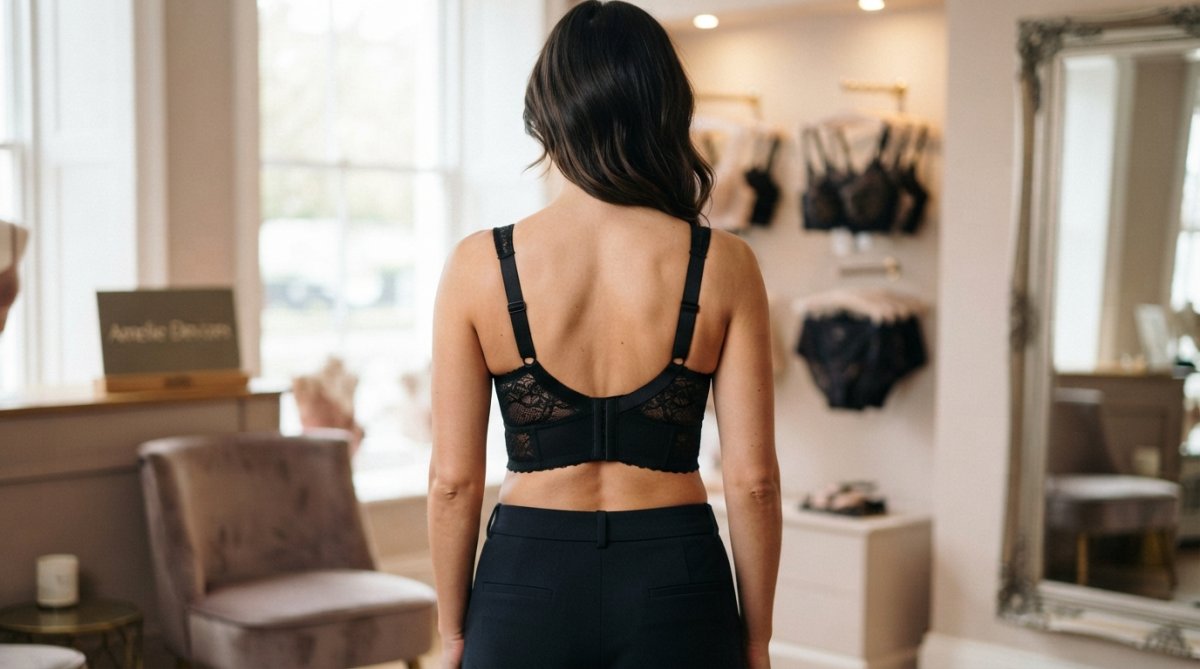
The back band is where the real work happens. When fitted correctly, it sits parallel to the ground without riding up or digging in, anchoring the entire garment and preventing the forward slouch that leads to shoulder and neck strain. Wide shoulder straps distribute weight across a larger surface, reducing pressure points and shoulder pain. Straps positioned closer to your neck encourage better posture alignment, while straps set too far forward pull your shoulders inward. When bra structure is right, your thoracic spine maintains its natural curve when your chest is lifted and shoulders are back.
The fabric matters too. Powernet, a high-compression fabric blended with elastane, provides support without rigidity, moves with your body, and maintains its shape through dozens of washes (peer-reviewed research).
How to Measure Bra Size at Home
Most women wear the wrong size, often going too large in the band and too small in the cup, a combination that destroys support (peer-reviewed research). Measuring yourself at home takes five minutes.
You'll need a soft measuring tape and a reasonably well-fitting bra. Wear it without padding and measure in the morning when your body is least swollen. Keep the tape snug but not tight.
Take two measurements. First, measure directly under your bust around your ribcage, this is your band size. Round a measurement like 82.5 cm up to 85 cm. Second, measure around the fullest part of your bust, keeping the tape parallel to the ground. The difference between your bust and band measurements determines your cup size. Each 2.5 cm (approximately one inch) of difference equals one cup size. If your bust measures 90 cm and your band is 80 cm, you're likely a 80D.
Different brands vary in how they grade sizes, a 80D in one brand may feel different from another. Professional fitting services account for these variations and find the brand and style that works for your body.
Wide Strap Bras for Back Pain: Why They Matter
Wide strap bras address the root cause of shoulder strain: pressure concentration. Narrow straps concentrate weight into a thin line, creating deep grooves and pain. Wide straps (typically 3.8 cm or more) spread that weight across a much larger surface area, dramatically reducing pressure.
Strap positioning matters equally. Straps set too close together pull your shoulders inward and force your upper back into a rounded position. Straps positioned wider apart, closer to your shoulder joints, encourage your shoulders to sit back naturally, reducing strain on your thoracic spine.
Materials make a difference. Wide straps made from thin, stretchy fabric will roll and shift throughout the day. The best use a nylon-elastane blend with enough structure to hold their shape while moving with your body.
Supportive Bras for Large Busts
Supportive bras for large busts face greater engineering challenges. The back band must be firm enough to anchor the weight without riding up. Look for back bands with multiple hook-and-eye closures (at least three rows) for micro-adjustments as the bra stretches.
Cup construction must use heavier-weight fabrics and substantial seaming. Powernet blended with nylon creates the compression needed without becoming uncomfortably rigid. Seams should be reinforced, particularly at the sides. Underwires should be stronger gauge metal and longer, extending fully to your ribcage.
Straps in larger cup sizes should be wider and set farther apart. Many women with larger busts benefit from straps 5 cm wide or wider, positioned to create a natural V shape across the back.
The Empreinte Gaby Bustier Long Line Bra in Black (£103.00) is engineered specifically for this challenge. Available in cup sizes up to G, it uses wide, soft-feel elastic and longline construction that extends support down the torso, distributing weight more evenly than standard bra lengths.

Our Top Picks for Back Support Bras
1. Empreinte Gaby Bustier Long Line Bra in Black
The strongest choice for serious back support combined with luxury construction. The underwired longline design extends 10-12 cm below the natural waistline, distributing weight across a much larger area of your torso and reducing concentrated pressure on your shoulders and back.
The back band uses wide, soft-feel elastic that maintains firmness through repeated wear. Available in 32-36 band sizes with cup sizes up to G, it covers the range where back pain complaints are most common. French engineering shows in every detail: reinforced seaming, substantial underwires, and construction engineered for durability.
Best for: Women with larger cup sizes (D-G) who want both support and elegance, or anyone willing to invest in a single high-quality bra that solves back pain.
2. Triumph Doreen Wire-Free Bra - Delicate White
Wire-free bras often sacrifice support, but the Triumph Doreen breaks that pattern. The structured fabric distributes pressure across a wider area rather than concentrating it in a thin wire. The polyamide-elastane blend provides enough compression to feel supportive without rigidity. At £40.00, it's accessible for testing whether wire-free construction works for your body.
Best for: Women who experience underwire discomfort, those seeking all-day comfort without sacrificing support, or anyone wanting a quality wire-free option at an accessible price.
3. Triumph Doreen Wire-Free Bra - Cotton Beige
This variant uses a cotton-blend fabric ideal for sensitive skin. The cotton content (22%) allows better breathability than pure polyamide, reducing heat and moisture buildup, particularly beneficial if you wear your bra for 12+ hours daily. At £40.00, the beige colourway is more versatile under light-coloured clothing.
Best for: Women with sensitive skin, those who prioritise breathability, or anyone seeking a comfortable wire-free option in a neutral shade.
4. Model Behaviour Bra Strap Cushions
These silicone pads slide onto existing bra straps, instantly reducing shoulder pressure. Made from high-grade super-soft silicone, they eliminate the deep grooves that develop from all-day wear and prevent strap slippage. At just £6.00, they work with any bra you already own. They're best used alongside a properly fitted bra with adequate strap width.
5. Model Behaviour Bra Strap Extenders
Bra strap extenders solve a different problem: a bra that fits perfectly everywhere except the band is too tight. Rather than discarding a favourite bra as it ages, a strap extender (£5.00 for a 3-pack) extends its life. The 3-pack includes beige, black, and white.
Best for: Extending the life of bras you love, accommodating weight fluctuations or bloating, or providing extra comfort during specific times of your cycle.
6. Model Behaviour Low-Back Bra Converter
The Low-Back Bra Converter (£9.00) solves a specific wardrobe problem: wearing a bra under low-back dresses without visible straps. This converter works with any back-closure bra you already own. The adjustable strap extender connects to your bra's hook-and-eye closure and wraps around your front, creating a low-back design.
Best for: Women who wear low-back outfits occasionally and don't want to invest in a dedicated low-back bra.
7. Bye Bra Low Back Traps
The Bye Bra Low Back Traps (£19.95) are a premium alternative. These exclusive straps lower your bra by 10 centimetres, making them suitable for even more dramatic low-back styles. Available in beige, black, and white, they're discreet and feel durable during extended wear.
Best for: Women who frequently wear low-back outfits and want a premium, comfortable solution.
| Product | Price | Best For | Key Benefit |
|---|---|---|---|
| Empreinte Gaby Bustier | £103.00 | Large busts, serious support | Longline construction distributes weight |
| Triumph Doreen (White) | £40.00 | Wire-free comfort seekers | Structured wire-free support |
| Triumph Doreen (Beige) | £40.00 | Sensitive skin, breathability | Cotton blend, neutral colour |
| Model Behaviour Cushions | £6.00 | Shoulder pressure relief | Works with existing bras |
| Model Behaviour Extenders | £5.00 | Extending bra life | Budget-friendly band adjustment |
| Model Behaviour Converter | £9.00 | Low-back outfit solutions | Affordable converter option |
| Bye Bra Low Back Traps | £19.95 | Premium low-back wear | Durable, comfortable design |
Key Features to Look for in Back Support Bras
When evaluating a bra for back support, focus on five specific structural features that directly impact performance.
The back band should be firm without being restrictive, sitting parallel to the ground without riding up or twisting. It should use multiple hook-and-eye closures (minimum three rows) for adjustment as elastic stretches over time. The fabric should blend nylon with elastane in a high-compression weave.
Shoulder strap width and positioning are equally critical. Straps should be at least 3.2 cm wide for smaller cup sizes and 3.8 cm or more for larger sizes. Positioning matters as much as width, straps should be set wide apart on the back, creating a natural V shape rather than converging toward the centre.
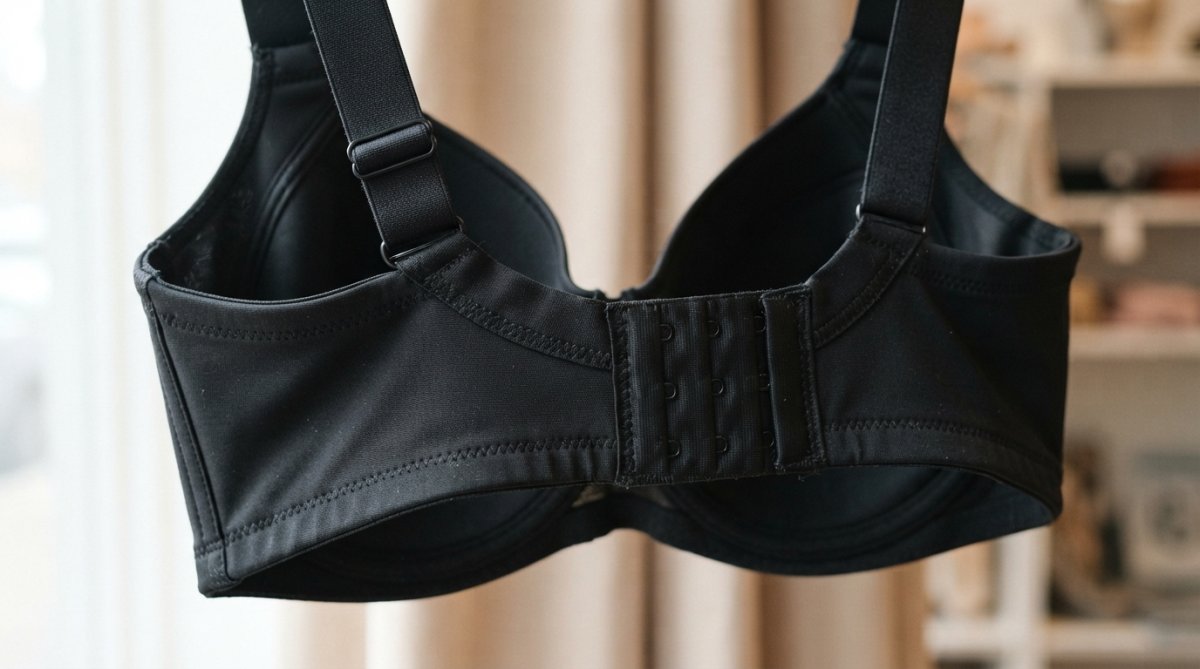
Cup construction becomes more important in larger sizes. The fabric should be substantial, a blend of powernet and nylon rather than thin microfiber. Seams should be reinforced, particularly at the sides. Underwires should be full-length, extending all the way to your underarm.
The overall length of the bra matters more than most realise. Longline bras (extending 10-12 cm below the natural waistline) distribute weight across more of your torso, reducing concentrated pressure on your shoulders.
Finally, consider the fabric blend carefully. High-quality bras use nylon-elastane blends that maintain their structure, breathe better, and last longer. Powernet is a strong signal, it's expensive to manufacture but provides the compression that creates genuine support.
Bra Fitting and Posture Correction
Proper bra fitting bridges the gap between buying the right size and actually experiencing support. Many women discover their band size is too large and cup size too small, the most common fitting error. A band that's too loose rides up in the back, forcing constant adjustment and creating the slouched posture that leads to back pain.
The band should sit level all the way around your torso. If it rides up in the back, your band is too large. If it digs into your ribs, it's too small. There should be about one finger's width of space between the band and your skin when fastened on the loosest hook.
Cup fit is equally important. The cup should fully contain your breast tissue without spillage at the sides or top. The underwire should sit flat against your ribcage, not floating away or pressing into tissue.
Posture correction happens automatically when the bra fits correctly. A properly fitted bra with adequate back band firmness and correctly positioned straps encourages your shoulders to sit back naturally. When your shoulders are pulled back and your chest is lifted, your thoracic spine naturally maintains its correct curve (peer-reviewed research). This reduces the muscular effort required to hold good posture, meaning you can maintain it throughout the day without fatigue. Over time, this consistent alignment can actually improve your baseline posture.
For women with existing back pain, the fitting process should address the specific cause. Is it shoulder strain from narrow straps? A band that's too loose or tight? Cup size forcing an unnatural shape? A good fitting service asks these questions and tests different styles to find what actually solves your problem.
The best bra for back support is the one that fits your body correctly and uses quality construction to maintain that fit through years of wear. The Empreinte Gaby Bustier Long Line Bra represents the premium end, engineered specifically for support and available in sizes that accommodate larger cup volumes. For most women, the path to better back support starts with accurate sizing and a bra using key structural features: a firm back band, wide shoulder straps positioned correctly, and substantial cup construction.
At Amelie Devizes, we specialise in finding the specific bra that works for your body and your concerns. Whether you're dealing with back pain, recovering from surgery, or seeking the confidence that comes from proper support, our fitting service takes time to understand your needs and test options until we find what actually works. Shop our full range of supportive bras and accessories, and discover the difference that proper fitting and quality construction can make.
Frequently Asked Questions
Q: What features should I look for in bras for back support?
A: The best bras for back support feature a firm, wide back band that distributes weight evenly across your shoulders and spine. Look for adjustable straps with sliders, wide shoulder straps to reduce pressure points, and underwire or structured support. A longline style extends support further down the torso, whilst powernet fabric and hook-and-eye closures provide stability. Proper cup capacity prevents spillage that strains your back, and breathable materials maintain comfort throughout the day.
Q: How do I know if I'm wearing the correct bra size?
A: An ill-fitting bra is one of the most common causes of back pain. Your band should sit level all the way around without riding up at the back. The straps should sit on your shoulders without slipping, and there should be no spillage above or below the cups. When you fasten the back hooks, you should be able to fit one finger between the band and your skin. If the band feels tight or leaves deep grooves, you may need a larger size; if it rides up, you need a smaller band.
Q: Can a properly fitted bra really help with back pain?
A: Yes. Poor bra fit forces your body to compensate for inadequate support, leading to shoulder strain, upper back tension, and spinal misalignment. A correctly fitted bra with a firm back band, wide straps, and proper cup capacity distributes your bust weight evenly, reducing strain on your shoulders and thoracic spine. Many women experience noticeable relief from back and shoulder discomfort within days of switching to a well-fitted supportive bra. Professional fitting services can identify fit issues you might miss on your own.
Q: What is the difference between a standard supportive bra and a posture-correcting bra?
A: A standard supportive bra focuses on lift, stability, and proper weight distribution through a firm band and structured cups. A posture-correcting bra goes further, often featuring a longer back panel, reinforced back band tension, and sometimes integrated shoulder support to actively encourage spinal alignment. Both types benefit from professional fitting to ensure maximum effectiveness.
This article was written using GrandRanker