

Bra Fitting for First Time: A Step-by-Step Guide
Table of Contents
- Signs You Need a First Bra
- How to Measure Bra Size at Home
- Understanding Bra Fit: The Band and Cup Check
- What to Expect at a Lingerie Boutique Fitting
- Types of First Bras: Finding Your Comfort Style
- Common Bra Fitting Mistakes to Avoid
- How to Care for Your First Bra
- Building Confidence in Your Bra Fitting Journey
Last Updated: August 29, 2026
Signs You Need a First Bra
Breast development typically begins between ages 8 and 13, though this varies significantly (peer-reviewed research). You might notice tenderness, slight swelling, or breast tissue forming under the nipple. As development continues, your breasts become more visible through clothing, and you may feel self-conscious or experience discomfort during movement. These are genuine signals that your body needs proper support.
Physical activity is another indicator. If you're running, playing sports, or doing high-impact activities, breast support becomes important for comfort and confidence. The emotional side matters too, some people feel ready for a bra earlier than others, and that's completely valid. At Amelie Devizes, we understand that this transition is about feeling good in your own skin.
How to Measure Bra Size at Home
Learning how to measure bra size at home is straightforward and gives you a solid starting point before visiting a boutique. You'll need two measurements: your band size and your cup size.
What You'll Need
Gather these items before you start:
- A soft measuring tape (the kind used for sewing, not a rigid ruler)
- A mirror
- Comfortable, non-padded bra or no bra at all
- A notebook to write down your measurements
Measuring Your Band Size
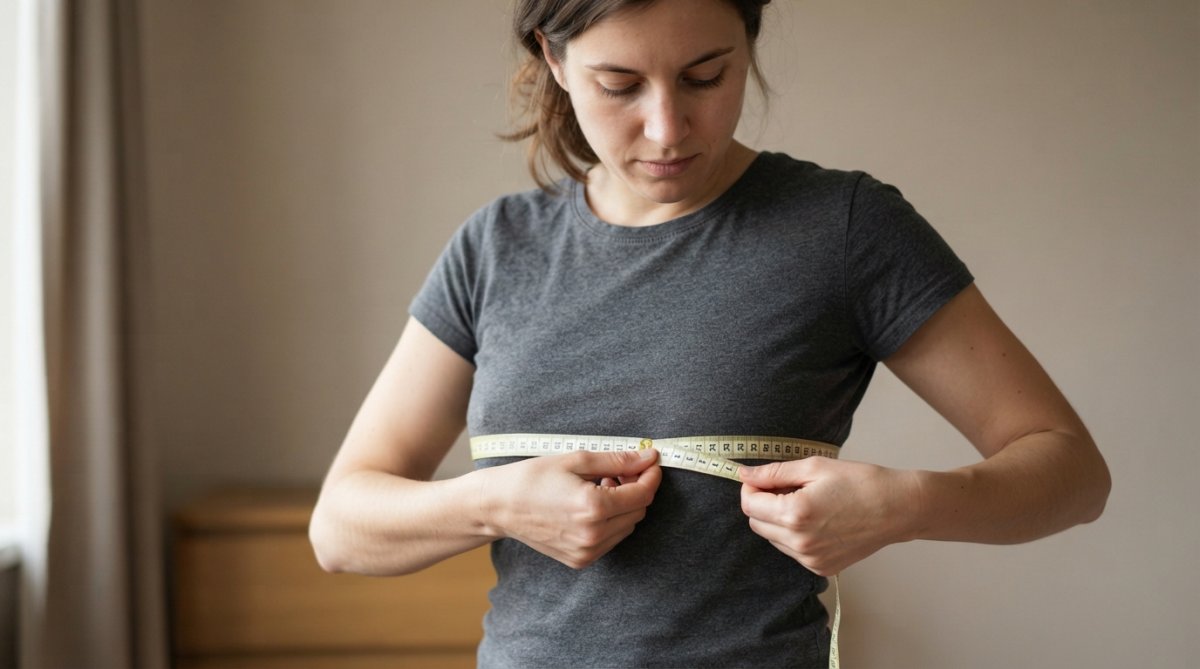
Your band size is the measurement around your ribcage directly under your bust. Stand in front of a mirror and wrap the soft measuring tape snugly (but not tightly) around your ribcage just underneath your bust. The tape should sit parallel to the ground and feel firm but not restrictive.
Write down this measurement in centimetres. If the number is even (like 76cm), that's your band size. If it's odd (like 77cm), round up to the nearest even number. Common band sizes start at 65cm and go up in 5cm increments: 65, 70, 75, 80, 85, 90, and so on. Your band should sit level all the way around your back and feel snug without digging in.
Measuring Your Cup Size
Cup size is determined by the difference between your bust measurement and your band measurement. Measure around the fullest part of your bust with the tape measure comfortably snug (not tight).
Now subtract your band measurement from your bust measurement. Each 2.5cm of difference equals one cup size: (the American Academy of Dermatology)
- 2.5cm difference = AA cup
- 5cm difference = A cup
- 7.5cm difference = B cup
- 10cm difference = C cup
- 12.5cm difference = D cup
- 15cm difference = DD cup
- 17.5cm difference = E cup
For example, if your band is 75cm and your bust is 85cm, the difference is 10cm, which means you're a C cup. Your size would be 75C.
Understanding Bra Fit: The Band and Cup Check
A proper bra fitting for first time teaches you what comfort and support actually feel like. The band is the foundation of your bra. It should sit level around your ribcage, parallel to the ground. You should be able to fit one finger comfortably under the band, not tight enough to leave marks, not loose enough to slip around (the American Dental Association).
The cups should contain your breasts fully without spillage at the sides or top. There should be no gaping at the cup edges, and the fabric should lie smoothly against your chest. The center gore, the fabric between the cups at the front, should sit flat against your breastbone. The shoulder straps should sit on the back of your shoulders without slipping down.
Most people benefit from trying on several sizes to understand the difference. What feels right varies from person to person. A professional bra fitting for first time helps you discover your personal preference.
What to Expect at a Lingerie Boutique Fitting
Walking into a boutique for a professional bra fitting for first time can feel intimidating. Knowing what to expect helps ease any nervousness and makes the experience genuinely helpful.
A professional fitting starts with a conversation about your lifestyle, comfort preferences, and any specific concerns. The fitter will ask about the types of bras you've worn and what you'll be wearing the bra under most often. You'll be measured professionally, which is more precise than measuring yourself at home. The fitter uses specific techniques to ensure accuracy and accounts for how different brands fit slightly differently.
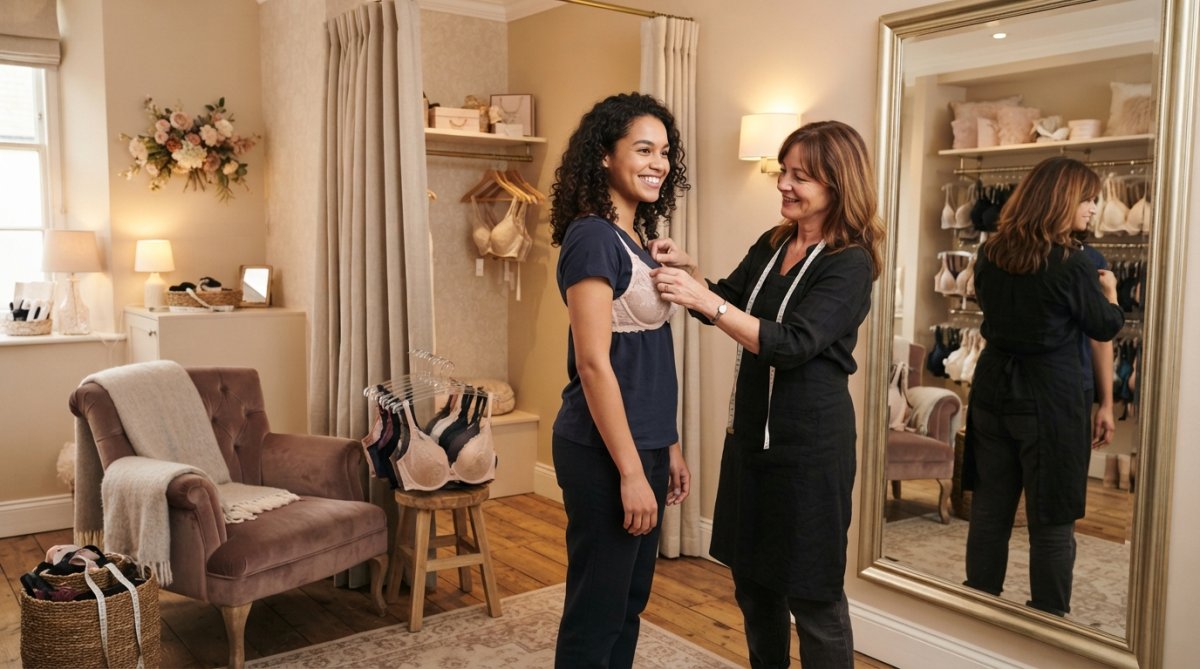
Once they've determined your size, the fitter will bring you several options to try on. You'll try on different styles, brands, and fits to see what feels best on your body. A good fitter checks how each bra sits, adjusts the straps, and explains what you're feeling. The fitting room itself should feel private and comfortable. You're not being judged, a professional boutique creates a non-judgmental space where you can ask questions without embarrassment. At Amelie Devizes, we prioritize making you feel at ease during your fitting appointment.
By the end of a professional fitting, you'll understand your true size and what to look for when shopping. You'll know which brands fit your body well and which styles provide the comfort you need.
Types of First Bras: Finding Your Comfort Style
Your first bra doesn't have to be underwired or complicated. Understanding the main types helps you choose what actually works for your body and lifestyle.
A crop top bra is often the gentlest introduction to bra wearing. It's a soft, stretchy band of fabric with minimal shaping that provides light support and coverage without any wires, hooks, or complicated closures. Non-wired bras (also called soft cup or wireless bras) offer more support than crop tops while keeping that comfortable, unrestricted feeling. They use soft padding or structured fabric to shape and support your breasts without the rigid wire that runs under the bust. The Triumph Doreen Wire-Free Bra in cotton beige or delicate white offers that perfect balance of comfort and subtle support for everyday wear.

Triangle bras feature soft padded cups shaped like triangles that provide gentle coverage and support. The MEY Poetry Vogue triangle non-wired bra combines delicate lace with soft padding for a feminine style that still feels comfortable all day.
Underwired bras provide more shaping and lift, with a wire that runs under the bust to create defined cups. These aren't typically recommended for your first bra unless you specifically want that level of support. Sports bras are designed for movement and activity, reducing bounce and providing targeted support during high-impact exercise.
The fabric matters as much as the style. Cotton and cotton-blend fabrics breathe well and feel soft against your skin. If you have sensory sensitivities, pay attention to seams, tags, and fabric texture. There's no wrong choice, it's about what feels good on your body.
Common Bra Fitting Mistakes to Avoid
Even with good intentions, people often make fitting mistakes that lead to discomfort and poor support. The most common mistake is wearing a band that's too loose. A loose band provides no support and rides up in the back. A band should be snug enough to stay in place when you move.
Wearing cups that are too small is another frequent error. When cups are too small, your breasts spill over the edges, and you lose support entirely. Some people buy bras that are too tight, thinking tighter equals better support. In reality, a band that's too tight restricts breathing, causes shoulder tension, and leaves marks on your skin.
Ignoring strap adjustment is a simple mistake with big consequences. Most bras have adjustable straps in the back, take a moment to get them right. Not trying on multiple sizes is another pitfall. Bra sizing varies between brands, and sometimes a size up or down feels dramatically different. When you're getting fitted, try on at least 3-4 different sizes to understand what works best for your body.
Many people also neglect to replace their bras regularly. Over time, elastic loses its stretch, and bras become less supportive. If you're wearing the same bra every day, it breaks down faster. Rotating between 2-3 bras extends the life of each one.
How to Care for Your First Bra
Taking care of your bra keeps it comfortable and extends its lifespan. Hand washing is the best approach. Fill a sink with cool water and add a gentle lingerie wash or mild soap. Submerge your bra and gently agitate the water for a few minutes. Rinse thoroughly with cool water until all soap is gone.
Never wring or twist your bra. Instead, gently squeeze out excess water. Lay it flat on a clean towel to dry, or hang it by the band (not the straps, which can stretch). Air drying is best, machine washing and tumble drying damage elastic and can warp the cups. The Triumph Doreen Wire-Free Bra instructions recommend hand washing and air drying to maintain its cotton blend quality.

Store your bras in a drawer where they lay flat or hang loosely. Rotate between at least 2-3 bras if you can. Wearing the same bra every day breaks down the elastic faster. Replace your bra when the band loses elasticity, the cups no longer provide support, or the straps won't stay up. This usually happens after 6-12 months of regular wear.
Building Confidence in Your Bra Fitting Journey
Getting your first bra fitted properly is about more than finding the right size, it's about building confidence in your changing body. A professional bra fitting for first time in a supportive environment helps shift your perspective. When a fitter shows you how a proper bra feels and explains that your body is developing exactly as it should, it changes how you see yourself.
Wearing a bra that actually fits properly makes a real difference in how you feel day-to-day. You're more comfortable in school, during sports, and in social situations. That comfort translates to confidence. It's also worth recognizing that this is a personal journey. Your body will continue to change, and your bra size might shift. That's completely normal.
At Amelie Devizes, we believe every person deserves to feel confident and comfortable in their own skin. Our boutique provides a warm, inclusive space where you can ask questions without judgment and get fitted properly. The confidence that comes from a proper bra fitting for first time lasts far beyond the fitting itself.
Getting your first bra fitted properly sets you up for comfort and confidence for years to come. At Amelie Devizes, we specialize in personalized bra fitting services in a warm, welcoming boutique environment where you'll feel completely at ease. Our expert fitters help you understand your size, find styles that work for your body, and build the confidence that comes from wearing a bra that actually fits. Shop our collection of comfortable, high-quality bras including the Triumph Doreen Wire-Free Bra and MEY Poetry Vogue triangle bra, and discover the difference a proper fitting makes.

Frequently Asked Questions
When should I get fitted for my first bra?
Most girls start wearing a bra between ages 12 and 14, though timing varies based on breast development and personal comfort. Signs include visible breast development, discomfort without support, or feeling self-conscious. There's no single 'right' age, it's about what makes you feel confident and comfortable. A professional fitting can happen whenever you're ready.
How do I measure bra size for the first time at home?
You'll need a soft measuring tape. Measure your underbust (directly under your bust where the band sits) in centimetres while wearing no bra and standing straight. Then measure around the fullest part of your bust. The difference between these measurements determines your cup size: each 2.5cm difference equals one cup size. Record both numbers and use a sizing guide to find your size. If measuring feels uncertain, a professional fitting removes guesswork entirely.
What should I wear to a bra fitting appointment?
Wear comfortable clothing you can easily remove, like a t-shirt or button-up top. Avoid heavily padded bras or multiple layers that make measurement difficult. Most boutiques provide a private fitting room, so you'll have privacy during the appointment. Coming braless or in a basic bra makes the process faster and more accurate. Bring a note of any specific concerns, like sensory sensitivity or shoulder pain, so the fitter can address them.
What are signs my first bra isn't fitting properly?
Common fitting problems include the band riding up in the back, cups that gap or spill over, shoulder straps that slip, or a centre gore (the fabric between cups) that doesn't sit flat against your chest. The band should sit level all the way around, and you should be able to fit one finger under it comfortably. If you experience back pain, shoulder indentation, or feeling unsupported, these indicate the band or cup size needs adjustment. Proper fit should feel secure without restriction.
This article was written using GrandRanker