

Supportive Bras After Breast Surgery: A Recovery Guide
Table of Contents
- Why Supportive Bras Matter After Breast Surgery
- When to Start Wearing a Bra After Surgery
- How Long to Wear Compression Bra After Breast Augmentation
- Post-Surgery Bra Features to Look For
- How to Measure for a Post-Surgery Bra
- Managing Swelling, Sensitivity, and Healing
- Pocketed Bras and Prosthesis Support
- Dressing Aids and Practical Tips for Recovery
Last Updated: August 16, 2026
Why Supportive Bras Matter After Breast Surgery
Choosing the right supportive bras after breast surgery is one of the most overlooked aspects of recovery. What you wear during those critical weeks directly affects your comfort, healing speed, and confidence as your body adjusts to changes.
After breast surgery, your chest wall is vulnerable. The surgical site needs protection from friction, pressure, and movement that could disrupt healing. A poorly fitted bra can increase swelling, irritate incisions, and create discomfort. The right bra stabilises the area, reduces stress on healing tissue, and lets you move through your day without constant awareness of your chest.
At Amelie Devizes, we've learned that supportive bras after breast surgery aren't just about size, they're about design. Front-fastening closures matter because you won't have the mobility to reach behind your back. Soft fabrics matter because skin sensitivity after surgery can make standard materials feel unbearable. Compression matters for some surgeries but not others. Understanding these distinctions transforms recovery from uncomfortable to manageable.
The goal isn't perfection. It's finding a bra that gets out of your way so your body can heal.
When to Start Wearing a Bra After Surgery
The timing of when to start wearing supportive bras after breast surgery depends on your surgeon's specific guidance and the type of procedure you've had. Most surgeons recommend waiting until after your initial post-operative appointment, typically one to two weeks after surgery, before introducing any bra.
During the immediate post-operative period, many women find that going braless or wearing only a loose surgical compression garment feels best. Your chest is swollen, tender, and any pressure can feel intolerable. Your surgeon may provide a post-operative compression bra designed specifically for this phase.
After your surgeon clears you, usually around week two, you can transition to a soft, supportive bra. Wire-free options with gentle compression work well during this phase because they provide support without underwire pressure against healing tissue.

For augmentation specifically, the timeline can extend longer. Many surgeons recommend wearing compression or supportive bras for four to six weeks post-surgery to help the implants settle into their final position. Ask your surgeon for their recommendation before purchasing anything.
The key is listening to your body. If a bra feels restrictive or causes pain beyond mild discomfort, remove it. Healing progresses with rest and appropriate support, not gritted teeth.
How Long to Wear Compression Bra After Breast Augmentation
For breast augmentation, how long to wear compression bra after breast augmentation depends on your surgeon's protocol and how your implants are settling. Most surgeons recommend compression or supportive bras for four to six weeks post-surgery, though some extend this to eight weeks for optimal results.
Compression bras apply gentle, consistent pressure across the surgical site and implant pocket. This pressure helps reduce swelling, supports healing, and encourages implants to settle into their intended position. Wearing compression during the critical first weeks can reduce the overall swelling timeline and help you see your final results sooner.
However, compression isn't comfortable long-term. After the initial four to six weeks, most women transition to regular supportive wire-free bras that provide comfort and gentle support without constant pressure.
Your surgeon will give you specific guidance on duration. Some recommend compression only during the day; others suggest wearing it day and night for the first two weeks, then daytime only for weeks three through six. Follow their protocol precisely, it's based on their surgical technique and your individual healing.
The mistake many women make is stopping compression too early because it feels restrictive. That discomfort is temporary and purposeful. Four to six weeks of compression support is worth the trade-off for better long-term results and faster swelling reduction.
Post-Surgery Bra Features to Look For
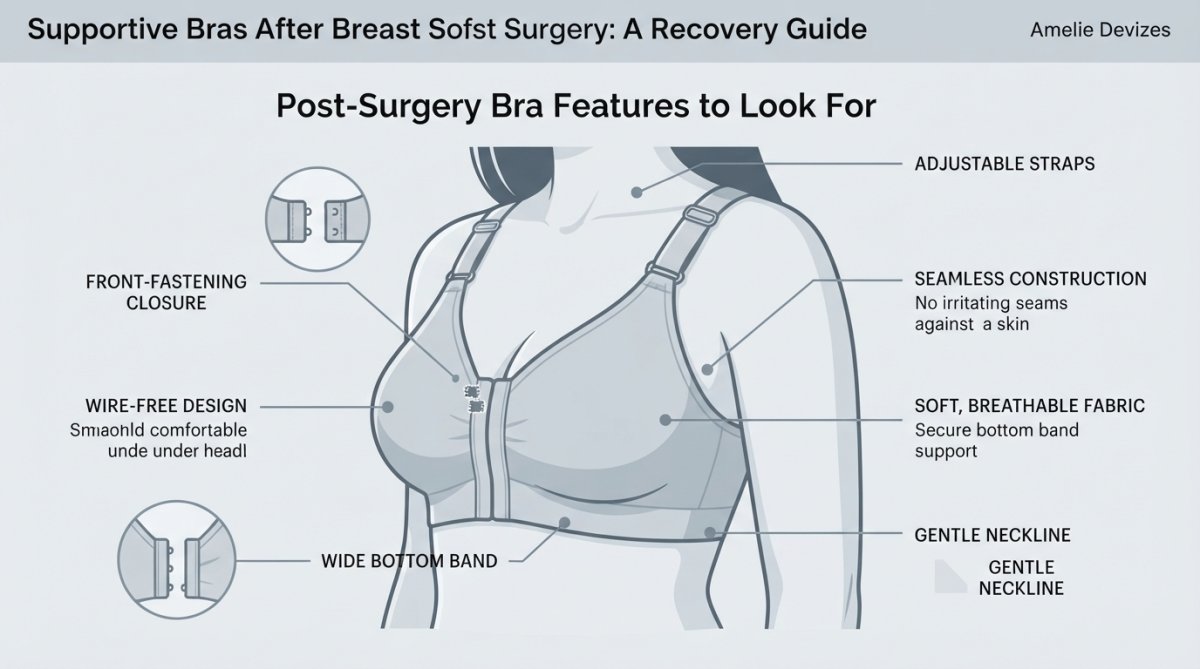
When selecting supportive bras after breast surgery, certain design features make an enormous difference in how the bra performs during recovery. The best post-surgery bra combines accessibility, comfort, and gentle support.
Front-fastening and accessibility
A front-fastening bra is non-negotiable after surgery. Your range of motion is limited, and reaching behind your back to fasten a traditional hook-and-eye closure causes pain and puts stress on healing incisions. Front-fastening designs, whether magnetic closures, velcro, or front hooks, let you put on and remove your bra with minimal arm movement.
Breathable and soft fabrics
Skin sensitivity after surgery is real. Standard polyester or synthetic blends can feel scratchy and irritating against healing skin. Look for bras made from breathable materials like cotton blends, bamboo, or soft microfibre. These fabrics allow air circulation, reduce moisture buildup, and feel gentle against sensitive areas.
Avoid anything with rough seams, rigid edges, or heavy embellishment. Your skin needs calm, gentle pressure, not texture that reminds you constantly that you're wearing something.
Compression vs. non-wired options
Compression and non-wired are not the same thing. Non-wired simply means no underwire, but a non-wired bra can still provide support through structured fabric and design. Compression specifically refers to graduated pressure that supports the surgical site and reduces swelling.
For the first few weeks post-surgery, most women need non-wired support. Wire-free bras eliminate the pressure point that an underwire creates against healing tissue. Compression bras add an extra layer of graduated pressure and are typically recommended for specific surgeries during a defined healing window.
Ask your surgeon which you need. Don't assume compression is always better, it's appropriate for specific situations and timeframes.
How to Measure for a Post-Surgery Bra
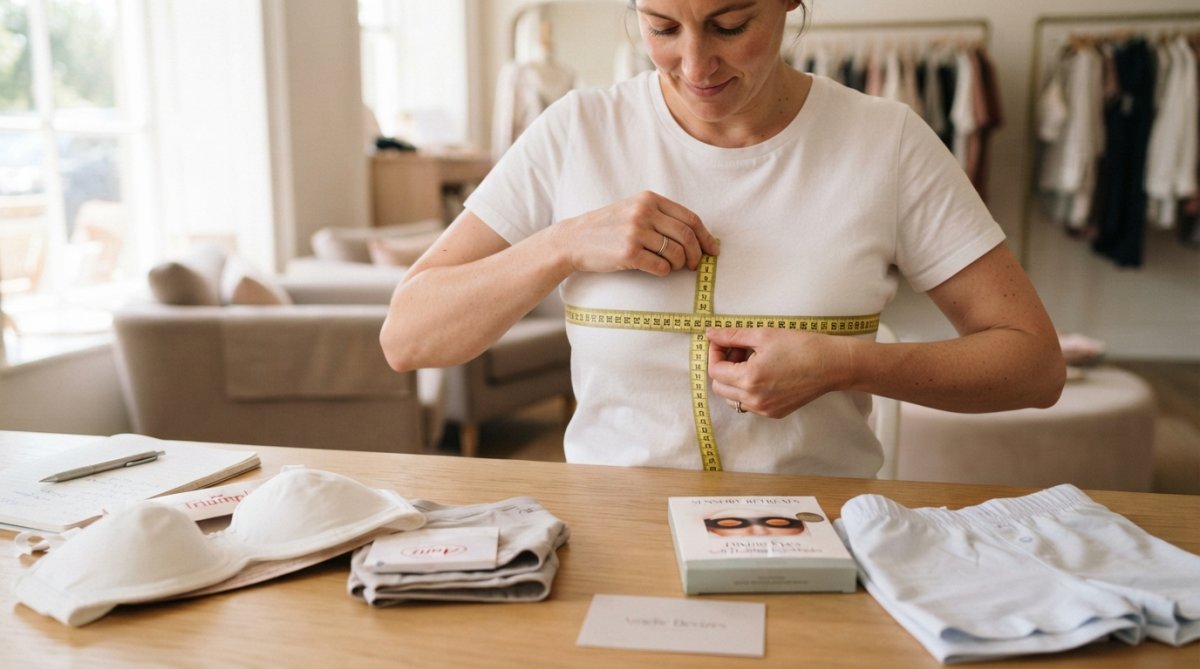
Measuring for a post-surgery bra is different from your pre-surgery measurement because swelling changes your dimensions temporarily. Most surgeons recommend waiting until two to three weeks post-surgery before measuring for a proper-fitting bra. By this point, initial swelling has reduced significantly, though some remains.
To measure yourself:
-
Measure your band size. Wear a soft, non-stretchy measuring tape around your ribcage directly under your bust, parallel to the ground. Keep the tape snug but not tight. Round to the nearest whole number.
-
Measure your bust. Measure around the fullest part of your bust, keeping the tape parallel to the ground.
-
Calculate your cup size. Subtract your band measurement from your bust measurement. Each inch of difference equals one cup size.
-
Account for post-surgery changes. Your cup size may have changed depending on your surgery type. Augmentation increases cup size; reduction and mastectomy decrease it.
However, self-measuring is difficult and often inaccurate. Professional fitting accounts for your post-surgery status, swelling timeline, and specific surgical needs. At Amelie Devizes, our fitting service ensures you're not struggling with ill-fitting bras during recovery.
Managing Swelling, Sensitivity, and Healing
Swelling peaks around day three to day five post-surgery, then gradually reduces over the following weeks. However, swelling can persist for months if you don't manage it properly. Gentle compression, elevation, and appropriate support all contribute to faster swelling reduction.
Your bra plays a role in this process. A bra that's too loose provides no support and allows excessive movement that increases swelling. A bra that's too tight restricts circulation and can actually increase swelling. The goal is a middle ground: snug enough to provide stabilisation and gentle compression, but not so tight that it restricts blood flow.
Skin sensitivity during recovery is equally important. Post-operative skin is more fragile and more reactive to irritation. This is why soft fabrics matter. Rough seams, synthetic materials, and rigid structures can cause irritation that extends your recovery timeline.
Many women find that sensitivity improves significantly by week four or five. At this point, you can often transition to bras with slightly more structure. But during the first two to three weeks, prioritise gentleness and breathability.
If you experience increasing redness, itching, or irritation from your bra, remove it and switch to something softer. Your surgeon can advise whether the irritation is normal sensitivity or something requiring attention.
Pocketed Bras and Prosthesis Support
For women who've had mastectomy or who choose to wear a breast form (prosthesis), pocketed bras are specifically designed to hold and support prostheses securely. These bras have an internal pocket that holds the breast form in place, eliminating the need for adhesive or additional fastening.
Pocketed bras are particularly valuable during recovery because they allow you to wear a prosthesis without the added pressure of adhesive against healing skin. When choosing a pocketed bra for post-surgery wear, look for the same features as any other post-surgery bra: front-fastening, soft fabrics, breathability, and gentle support.
Many women find that wearing a prosthesis during recovery, even if just occasionally, helps them feel more like themselves during a vulnerable time. Pocketed bras make this possible without compromising healing.
Dressing Aids and Practical Tips for Recovery
The physical limitations of post-surgery recovery extend beyond choosing the right bra. Getting dressed itself becomes challenging when your range of motion is limited and your chest is tender.
Dressing aids designed for limited mobility can make this process manageable. A dressing stick helps you pull clothing over your head without raising your arms above shoulder height. A sock aid helps you put on socks and trousers without bending forward. A reacher helps you pick up items from the floor without bending.
For bra-specific challenges, consider these practical solutions:
Front-fastening bras eliminate the need to reach behind your back. Magnetic closures are easier to manage than velcro if your hand strength is reduced.
Loose, button-front tops are easier to manage than pullover styles. During the first two weeks, avoid anything that requires pulling over your head.
Keep your recovery bras in an easily accessible drawer at waist height or higher.
Have multiple bras available so you can rotate them for washing and have options depending on how you're feeling each day.
Avoid anything with back zippers or complicated fastenings. These require movements you won't have the mobility to perform comfortably.
The first two weeks of recovery are temporary. These limitations pass. What matters is getting through them with minimal frustration and maximum comfort.
Recovery after breast surgery is deeply personal, and what works for one woman may not work for another. The right supportive bras after breast surgery are those that respect your healing timeline, accommodate your physical limitations, and make you feel supported rather than restricted. Prioritise comfort and proper fit. Your body is doing remarkable work healing itself; give it the gentle support it deserves.
When you're ready to explore options or need professional guidance on sizing and features, Amelie Devizes offers expert post-surgery bra fitting services designed specifically for women in recovery. Our team understands the unique demands of this phase and can help you find bras that support both your healing and your confidence. Shop all products to explore our curated collection of supportive, comfortable options, or book a fitting consultation to receive personalised guidance for your specific needs.
Frequently Asked Questions
What is the best bra to wear after breast surgery?
The best supportive bra after breast surgery combines soft, breathable fabric with front-fastening closures for easy access and minimal movement around the surgical site. Look for wire-free, non-wired designs that offer gentle stabilization without pressure on incisions. The Triumph Doreen Wire-Free Bra (available from £40) provides the comfort and support many post-surgery patients need, with soft lace and breathable materials. Avoid underwired bras until your surgeon confirms healing is complete, typically 6-8 weeks after surgery.
How long do I need to wear a compression bra after breast augmentation?
Most surgeons recommend wearing a compression bra continuously for the first 2-4 weeks after breast augmentation, then during the day for another 2-4 weeks. The compression helps manage swelling, supports the implant position, and reduces discomfort. However, recovery timelines vary depending on your surgery type and individual healing. Always follow your surgeon's specific guidance, as they understand your surgical approach and can advise when to transition to a supportive non-compression bra for the remainder of your recovery.
How do I measure for a post-surgery bra correctly?
Measure your band size by wrapping a soft tape measure snugly (but not tight) around your ribcage directly under your bust. For cup size, measure loosely around the fullest part of your bust. After surgery, your measurements may change due to swelling, so remeasure every 2-3 weeks during the first month. If you're unsure, professional fitting services can help account for post-operative changes and ensure comfort around sensitive areas. Many women find their size shifts as swelling reduces, so flexibility in bra selection matters during early recovery.
Can I wear a regular sports bra after breast surgery?
Regular sports bras are generally not recommended immediately after breast surgery because they often have seams, pressure points, and closures that irritate healing incisions. Specialised post-surgery bras are designed with soft, seamless construction, front-fastening for ease, and gentle support that doesn't compress the surgical site. After 6-8 weeks, once your surgeon confirms healing, you may gradually transition to other supportive options. Always prioritise comfort and avoid anything that causes pain or pressure near your incisions during the healing process.
This article was written using GrandRanker