

Best Lingerie for Back Pain Relief: 2026 Guide
Table of Contents
- Causes of Bra-Related Back Pain You Should Know
- How to Measure Bra Size at Home Accurately
- Key Features to Look for in Lingerie for Back Pain Relief
- Wide Strap Bras for Back Support: Top Picks
- Best Lingerie for Back Pain Relief: Full Comparison
- Physical Therapy Exercises to Pair With Supportive Bras
- Fabric, Breathability, and Long-Term Daily Wearability
- Conclusion
Last Updated: August 10, 2026
Back pain affects millions of women across the UK, and a poorly fitted bra is one of the most overlooked contributors. According to guidance from the British Chiropractic Association, bra fit issues can directly contribute to musculoskeletal discomfort in the neck, shoulders, and upper back. At Amelie Devizes, we work with women every day who arrive having worn the wrong size for years, and the difference a properly fitted, well-designed bra makes is immediate and genuine. This guide covers the best lingerie for back pain relief, from key features and fitting methodology to specific product picks and physical therapy exercises that complement your bra choice.
Quick Picks:
- Best for posture correction: Glamorise MagicLift Posture Back Support Bra
- Best soft cup for all-day comfort: Anita Comfort Clara Soft Cup Relief Straps Bra
- Best for fuller figures: Elomi Cate Full Cup Banded Bra
- Best sustainable option: JulieMay Silk Back Support Wireless Bra
- Best minimiser for back relief: Chantelle C Magnifique Seamless Unlined Minimizer Bra
Causes of Bra-Related Back Pain You Should Know
Poor fit, not poor design, is the root cause of bra-related discomfort.
How an Ill-Fitting Band Creates Spinal Strain
The back band should do approximately 80% of the work in supporting the bust. When a band sits too loose or rides up at the back, that load transfers entirely to the straps, which then pull forward on the shoulders. This disrupts spinal alignment, compresses the thoracic spine, and creates chronic strain in the upper and lower back muscles. A correctly fitted band sits horizontally across the back, parallel to the floor, and remains stable when you move. If yours rides up when you lift your arms, the band is too large.
Shoulder Indentation and Strap Pressure Points
When straps carry too much load, they cut into the trapezius muscle, causing shoulder indentation, nerve compression, and referred pain into the neck and arm. Wide straps spread that load over a greater surface area, reducing pressure per square centimetre. Straps set too short pull the back band upward, while straps too long allow the cups to fall away, forcing the wearer to hunch forward.
How to Measure Bra Size at Home Accurately
Knowing how to measure bra size at home accurately is the single most important step in addressing bra-related back pain. Most women are wearing a band one to two sizes too large and a cup size too small, precisely the combination that creates the most strain.
Finding Your Band Size
Measure snugly around your ribcage directly under the bust, keeping the tape measure parallel to the floor. Round to the nearest whole number. In UK sizing, this measurement in centimetres corresponds to your band size. The band should feel firm but not painful. You should be able to slide two fingers underneath it, but no more. Start on the loosest hook-and-eye closure when the bra is new; as the elastic relaxes, move to tighter hooks to maintain rib cage support.
Calculating Your Cup Size
Measure around the fullest part of your bust, keeping the tape parallel to the floor. Subtract your band measurement from this bust measurement. Each 2.5 cm of difference corresponds to a cup size: 2.5 cm is an A cup, 5 cm is a B, 7.5 cm is a C, 10 cm is a D, and so on. Sister sizing is also worth understanding: a 34D and a 32E contain the same cup volume, so if a 34D band feels too loose, trying a 32E will give you a smaller, more supportive band without reducing cup room.
Key Features to Look for in Lingerie for Back Pain Relief
The best lingerie for back pain relief shares a consistent set of structural features regardless of style or brand.
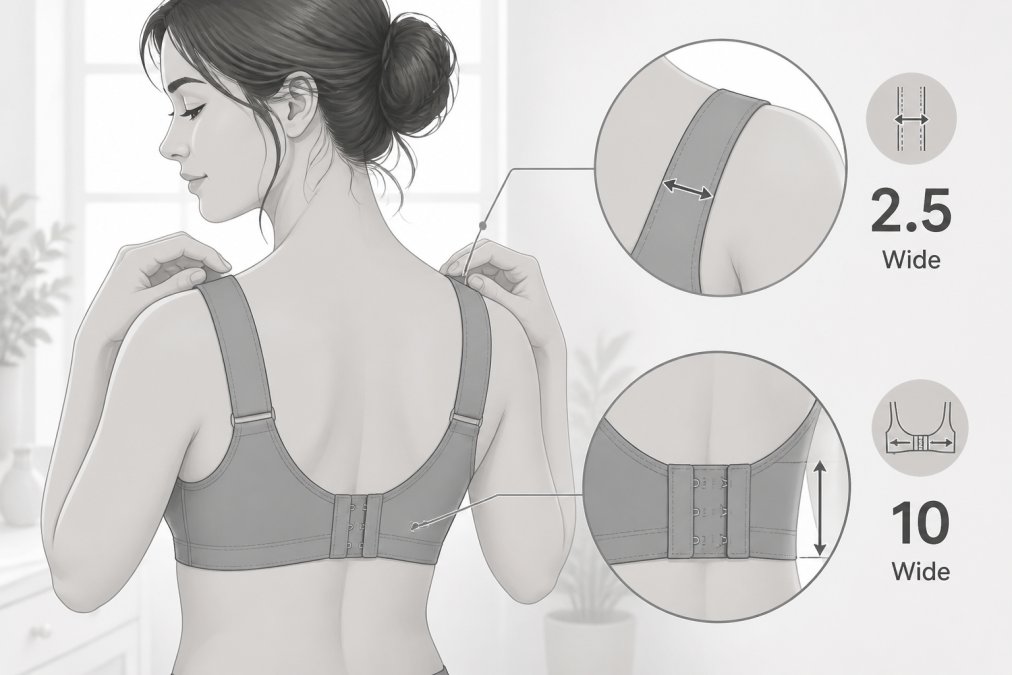
Wide, padded, or cushioned straps are non-negotiable for women with larger busts. Straps narrower than approximately 2 centimetres concentrate pressure on a small area of muscle and skin. Wide straps distribute weight across the shoulder and reduce indentation and referred neck pain.
A firm, wide back band provides the underbust support that prevents the bust from pulling the shoulders forward. Look for bands with multiple hook-and-eye closures (three or four columns rather than two) and powermesh or elasticated panels that anchor the band to the body without digging in.
Four-way stretch fabric allows the bra to move with the body rather than against it, reducing friction and pressure points during daily activity.
Full coverage cups keep the bust properly contained and centred, reducing the pendulum effect that creates forward-pull strain. Three-piece cup constructions offer better shaping and side support than single-panel designs.
Ergonomic design details such as leotard backs, criss-crossed back panels, and inner side slings contribute to thoracic support by anchoring the bra more securely to the body and reducing strap slippage.
| Feature | Why It Helps | What to Look For |
|---|---|---|
| Wide straps | Reduces shoulder strain and indentation | At least 2 cm width, padded or cushioned |
| Firm back band | Provides underbust and spinal support | 3-4 hook closures, powermesh panels |
| Full coverage cups | Reduces forward-pull on spine | Three-piece construction, side slings |
| Breathable fabric | Supports daily wearability | Pima cotton, moisture-wicking blends |
| Four-way stretch | Moves with the body | Lycra or elastane content noted on label |
| Adjustable straps | Prevents strap slippage and pressure | Fully adjustable, not fixed |
Wide Strap Bras for Back Support: Top Picks
Wide strap bras for back support represent the most direct design solution for shoulder and upper back pain.
Glamorise MagicLift Posture Back Support Bra (1265) is the standout choice for posture-related upper back pain. The patented MagicLift design is wire-free and uses criss-crossed cotton and Lycra spandex bands across the back to actively encourage posture correction. The extra-wide, half-adjustable straps distribute weight effectively across the shoulder, and the front opening makes it accessible for women with limited shoulder mobility or post-surgery patients. The built-up back panel provides genuine thoracic support.
Anita Comfort Clara Soft Cup Relief Straps Bra (5860) uses a three-section soft cup design with double-layered cups for fuller sizes, paired with wider fully adjustable relief straps that prevent pressure on the shoulders. The underbust band is engineered to sit away from the stomach, which helps women who find standard bands uncomfortable across the lower rib cage. This is the more elegant option for daily wear.
Best Lingerie for Back Pain Relief: Full Comparison
The right choice depends on your specific pain pattern, cup size, and lifestyle.
Wireless Options for Chronic Pain Management
Wireless bras remove the risk of underwire digging into the breast tissue or sitting incorrectly against the rib cage, which is a genuine source of discomfort for many women, particularly those with larger cup sizes or post-surgery sensitivities.
JulieMay Silk Back Support Full Coverage Wireless Organic Cotton Bra is made from GOTS Certified Organic Pima cotton and pure silk, addressing breathability and skin sensitivity alongside support. The crossover full-coverage design adds back support, and the wide straps reduce neck and shoulder pressure. This is the best choice for women with skin sensitivities or those prioritising sustainability.
Glamorise MagicLift (covered above) also belongs in this category, offering a more structured wireless solution with its criss-crossed back panel.
Underwire Bras That Still Prioritise Comfort
Underwire is not the enemy of comfort. A correctly fitted underwire sits flat against the sternum, encircles the breast tissue completely, and never touches the breast itself.
Elomi Cate Full Cup Banded Bra is built for DD to O cup sizes and provides exceptional uplift and forward shaping through its three-piece cup construction. The powernet wings provide additional anchorage and rib cage support, and the strap positioning prevents strap slippage. For women with larger busts, the weight distribution this bra achieves is substantially better than a soft cup alternative.
Panache Andorra Full Cup Bra covers D to J cup sizes with powermesh wings and inner side slings that centralise the bust. The fully adjustable straps and stretch lace top cups make it comfortable enough for full-day wear without sacrificing support.
Freya Idol Moulded Balcony Bra offers smooth seam-free cups for D to L cup sizes. The fully adjustable straps and underwired support make it a strong everyday option for women who want reliable support without a clinical aesthetic.
For those seeking a minimising effect alongside back relief, the Chantelle C Magnifique Seamless Unlined Minimizer Bra reduces the bustline by up to 2.5 cm without flattening, using wide smoothing back wings and foam-padded straps. The Wacoal Ultimate Side Smoother Underwire T-Shirt Bra similarly uses a crisscross band design to minimise back and side bulge while keeping straps in place via a leotard back.
Front-Closure and Posture-Correcting Designs
Front-closure bras are particularly valuable for women with limited shoulder mobility, those recovering from surgery, or anyone who finds back-fastening bras painful. The Glamorise MagicLift includes a front opening as a core feature.
Posture-correcting designs work by creating resistance against the forward shoulder roll that poor bra fit encourages. The criss-crossed back panel of the Glamorise and the crossover design of the JulieMay both function this way, pulling the shoulders back gently and supporting thoracic extension throughout the day.
| Bra | Style | Best For | Cup Range | Key Feature |
|---|---|---|---|---|
| Glamorise MagicLift 1265 | Wireless, front-closure | Posture correction, limited mobility | Full range | Criss-cross back support panel |
| Anita Comfort Clara 5860 | Soft cup, wireless | All-day comfort, shoulder relief | Larger sizes | Relief straps, stomach-friendly band |
| Elomi Cate Full Cup | Underwire, full cup | Fuller figures, weight distribution | DD-O | Powernet wings, forward shaping |
| Panache Andorra | Underwire, full cup | Classic support, D-J | D-J | Inner side slings, powermesh wings |
| JulieMay Silk Wireless | Wireless, full coverage | Sensitive skin, sustainability | Selected | Organic Pima cotton, pure silk |
| Chantelle C Magnifique | Underwire, minimiser | Reducing bust appearance | Standard | Wide back wings, padded straps |
| Freya Idol Moulded | Underwire, balcony | Everyday wear, smooth silhouette | D-L | Seam-free cups, adjustable straps |
| Wacoal Ultimate Side Smoother | Underwire, T-shirt | Smooth look, back smoothing | Standard | Leotard back, crisscross band |
Physical Therapy Exercises to Pair With Supportive Bras
A supportive bra addresses the external load. Physical therapy exercises address the muscular imbalances that make that load harder to carry. The two approaches work best together.
The most common pattern in women experiencing bra-related back pain is weak upper back muscles and tight chest muscles. Years of forward shoulder posture, often exacerbated by an unsupportive bra, cause the pectoral muscles to shorten while the rhomboids and mid-trapezius become lengthened and weak. A bra with a posture-correcting design helps hold the correct position; these exercises train the muscles to maintain it independently.
According to guidance from the Chartered Society of Physiotherapy, strengthening the muscles of the upper back and improving thoracic mobility are central to managing chronic musculoskeletal pain in the neck and shoulder region.
Thoracic extension over a rolled towel. Place a tightly rolled towel horizontally across the mid-back at the level of the shoulder blades. Gently extend backwards over the roll, hands supporting the head. Hold for 20 to 30 seconds. This directly addresses the thoracic compression that poor bra support accelerates.
Doorway chest stretch. Stand in a doorway with arms at 90 degrees, forearms resting on the frame. Gently step forward until you feel a stretch across the pectoral muscles. Hold for 30 seconds, twice per side. This counteracts the shortening that forward shoulder posture creates.
Seated row with resistance band. Sit with legs extended, loop a resistance band around your feet, and pull both hands towards your hips with elbows tucked in. This strengthens the rhomboids and mid-trapezius, the muscles most responsible for holding the shoulders back.
Scapular squeezes. Sitting or standing, draw the shoulder blades together and downward, hold for five seconds, release. Repeat ten times. This can be done anywhere and is particularly useful during long periods at a desk.

Fabric, Breathability, and Long-Term Daily Wearability
The best-fitting bra becomes uncomfortable by mid-afternoon if the fabric traps heat, irritates the skin, or loses its elasticity within months of regular washing.
Breathable fabric is not a luxury feature. For women wearing a bra for eight or more hours a day, moisture-wicking and breathable construction directly affects skin health and comfort. Pima cotton, as used in the JulieMay Silk Back Support Bra, is exceptionally soft, breathable, and gentle on sensitive skin. Pure silk adds a natural temperature-regulating quality that synthetic fibres cannot replicate.
For women not specifically seeking natural fibres, look for blends that include a meaningful percentage of cotton or modal alongside the Lycra or elastane needed for four-way stretch. Fully synthetic bras can trap moisture against the skin and cause friction-related irritation, particularly under the back band and along the underwire channel.
A bra that costs more initially but is made from ethically sourced, durable materials often represents better value than a lower-cost alternative that loses its shape and support after twenty washes. As noted by the Soil Association's guidance on organic textiles, GOTS certification provides assurance that organic claims across the supply chain are independently verified.
Care also matters for longevity. Machine washing on a hot cycle degrades elastic far faster than a cool hand wash or delicate machine cycle inside a mesh laundry bag. Tumble drying is the single fastest way to destroy the elasticity that makes a back band supportive. Replacing a bra when the elastic has gone is not optional: a stretched band no longer provides underbust support, and the cycle of back pain begins again.
Frequently Asked Questions
Can a poorly fitted bra cause chronic back pain?
Yes. A bra that fits incorrectly shifts the load of your bust away from the back band, where it belongs, and onto your shoulders and neck. Over time, this creates persistent muscle tension across the upper back and thoracic spine. Studies in musculoskeletal research consistently link incorrect band and cup size to shoulder, neck, and back discomfort. A professional bra fitting, which checks both band size and cup size together, is the most reliable way to resolve lingerie-related chronic pain.
What type of bra is best for back pain?
The best lingerie for back pain relief combines a firm, wide back band, broad adjustable straps, and full cup coverage. Wireless soft-cup bras remove pressure points caused by underwire, while posture-correcting designs with criss-cross back panels actively encourage spinal alignment. Front-closure styles suit anyone with limited shoulder mobility. The correct band size matters most: roughly 80% of a bra's support should come from the band, not the straps.
How does strap width affect back pain?
Wider straps spread the weight of the bust over a larger surface area of the shoulder, reducing the pressure at any single point. Narrow straps concentrate load into a small strip of tissue, which causes the shoulder indentation and nerve compression many women experience after a full day's wear. Wide strap bras for back support, particularly those with padded or cushioned strap construction, make a measurable difference to shoulder strain during long periods of wear.
Should I wear a sports bra every day to ease back pain?
Sports bras offer compression rather than structured support, which can actually worsen posture over time by flattening the bust and encouraging rounded shoulders. For everyday back pain relief, a properly fitted underwire or wireless bra with a firm back band and wide straps provides better spinal alignment and weight distribution than a standard sports bra. Reserve sports bras for exercise, and choose a fitted, supportive everyday style for long-term comfort.
Are posture-correcting bras effective for back pain?
Posture-correcting bras with criss-cross or reinforced back panels can help encourage better thoracic posture by gently pulling the shoulders back. They work best as part of a broader approach that includes correct bra sizing, regular movement, and targeted back exercises. On their own, they will not fix underlying musculoskeletal issues, but worn consistently in the correct size, they reduce the forward shoulder rounding that worsens upper back pain.
Finding the right lingerie for back pain is rarely a one-size-fits-all process, and that is precisely where a professional fitting makes the difference. At Amelie Devizes, our expert bra fitting service is designed to take the guesswork out of the process entirely, matching you with the right band size, cup size, and style for your specific body, pain pattern, and lifestyle. Visit ameliedevizes.co.uk to explore our full collection or book your fitting.
This article was written using GrandRanker